2026-07-22
The Fig Leaf and Other Indignities: David's 500 Years of Censorship
Stones in 1504, a Victorian fig leaf, a hammer in 1991, a Florida school in 2023. A Florence guide walks through the documented times people tried to cover, move, or attack Michelangelo's David.
 By Luca Moretti, Florence Accademia Gallery guide and skip-the-line specialist
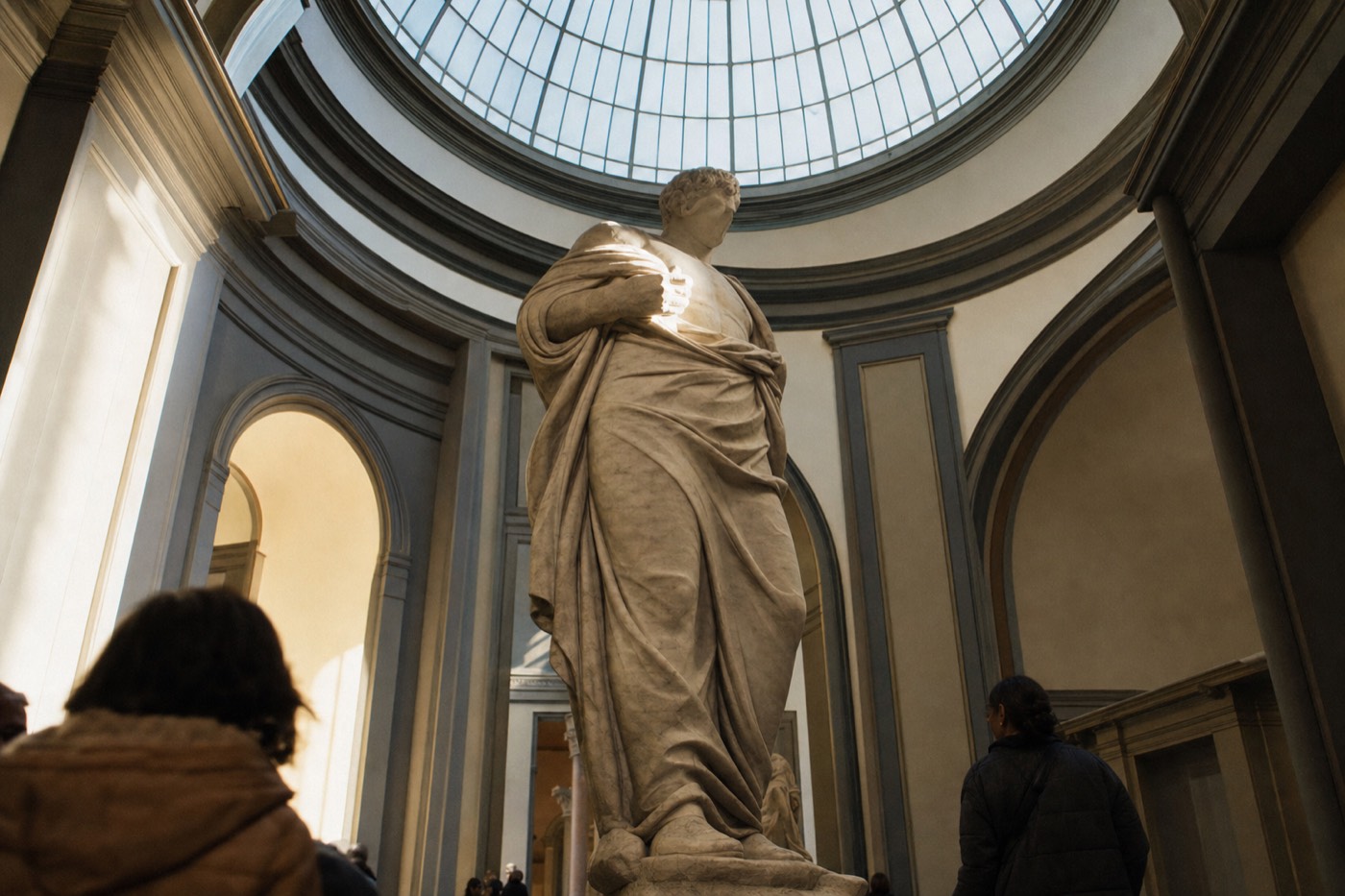
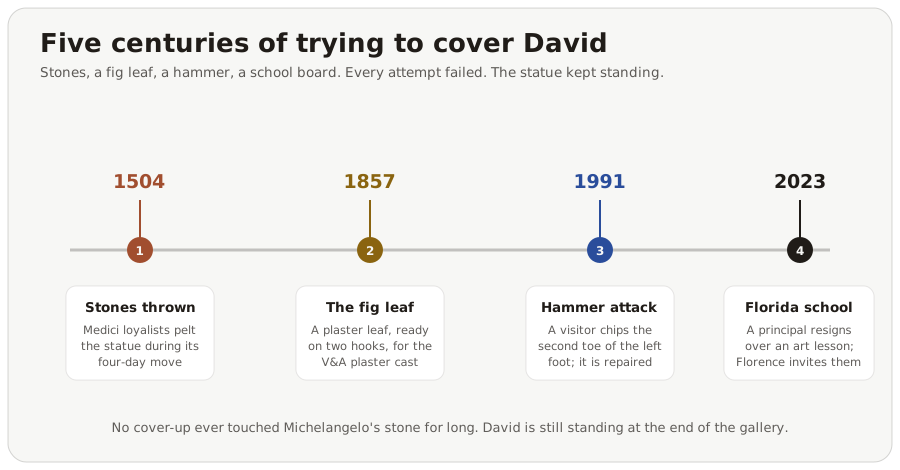
On the second toe of David's left foot there is a repaired line most visitors never notice. I point it out only when someone asks the right question, because that toe was smashed with a hammer in 1991, glued back together, and set again under the same skylight where Michelangelo's giant has stood since 1873. Five centuries in, David has been pelted with stones, fitted with a plaster fig leaf for a queen, attacked outright, and pulled into a school-board fight in Florida. Almost none of it was about the sculpture failing. Most of it was about people failing to look at it calmly. Here are the episodes I can actually document, in order.
Was the statue of David controversial when it was unveiled?
Yes, but the first objection was political, not moral. During the four-day move to Piazza della Signoria in 1504, opponents threw stones at the statue at night, and it had to be guarded inside a wooden cage. David was a republican emblem in a city that had just expelled the Medici, and some Florentines did not want him standing watch over the government.
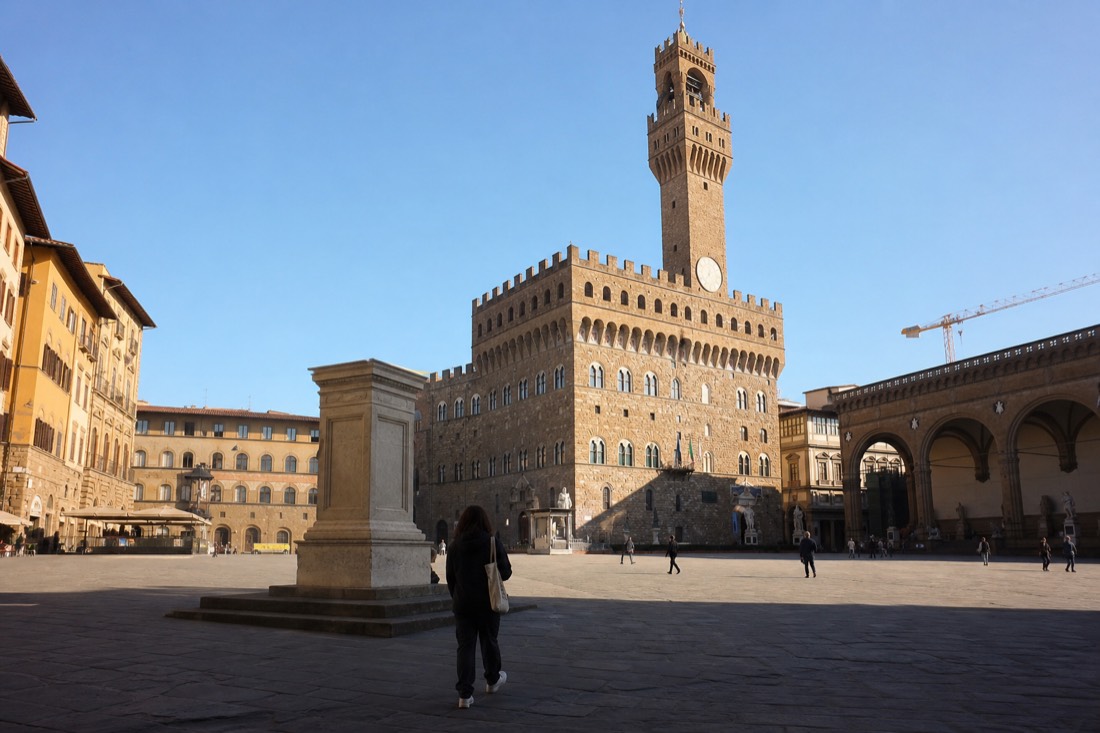
The apothecary Luca Landucci kept a diary that year, and he recorded the stones thrown during the transport, an episode the statue's history still reports. Forty men and a specially built wooden track moved the block across the city over four days. Guards slept beside it. The vandalism was the work of Medici sympathizers who read the young shepherd, sling over his shoulder, as a warning aimed straight at tyrants, which is exactly how Britannica frames the sculpture's meaning for republican Florence.
The nudity, oddly, caused less trouble in 1504 than the politics did. Florence had spent a century looking at heroic nudes and understood the visual grammar of it. Still, someone decided David needed a little covering, which brings us to the first act of what we would now call censorship. If you want the fuller argument for why the figure was carved nude at all, I answer that head on in the David anatomy questions.
| Era | Who objected | What they wanted | How it ended |
|---|---|---|---|
| 1504 | Medici loyalists | The statue kept out of the square | Guarded, installed anyway |
| 1500s | Florentine authorities | A garland over the groin | A gilt-copper leaf skirt added |
| 1850s | Victorian propriety | The nudity hidden from royalty | A detachable plaster fig leaf |
| 2020s | Modern culture wars | The image treated as indecent | Public backlash, David unchanged |
What was the fig leaf made for David?
The fig leaf was a detachable plaster shield made in Victorian London, not for the marble original but for a full-size plaster cast the V&A received in 1857. Queen Victoria was reportedly startled by the nude copy, so a fig leaf was cast and kept ready on two hooks, hung over the statue whenever royalty visited.
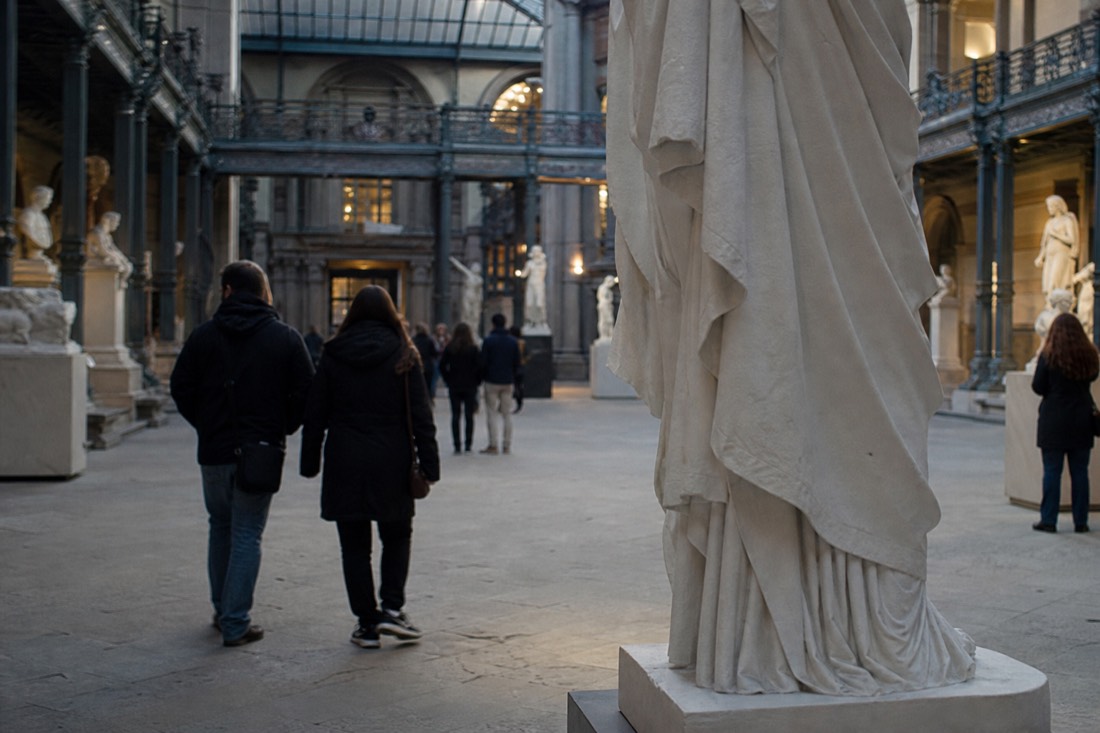
That plaster David still stands in the museum's Cast Courts in London, and the fig leaf survives too, stored separately as a small artifact of its own. The story is almost comic in its logistics: a half-meter of molded plaster, two brass hooks on the wall behind the statue, and a member of staff ready to hang it whenever a royal party was expected. Nobody sanded the original. This was theater for visiting dignitaries.
It was not even the first cover-up. Soon after David went up in Florence, a garland of gilded copper leaves was strung around the groin, a documented addition I write about in detail in what David originally looked like. So the marble hero has worn two different kinds of leaf across his life, one Florentine and gilded, one Victorian and removable, and neither belonged to Michelangelo's design.
| Cover-up | Where | Roughly when | On the original marble? |
|---|---|---|---|
| Gilt-copper leaf garland | Florence, the real statue | Soon after 1504 | Yes, since lost to weather |
| Plaster fig leaf | London, the V&A cast | From 1857 | No, on the copy only |
The pattern is consistent. When David upsets someone, the response is almost never to remove the statue. It is to add a small piece of metal or plaster and pretend the problem is solved.
Has the David ever been attacked?
Yes. In September 1991 a man named Piero Cannata, later found to have a psychiatric history, struck the statue with a hammer he had concealed, chipping fragments from the second toe of David's left foot before bystanders restrained him. Conservators recovered the pieces and reattached them, and the museum has monitored the marble closely ever since.
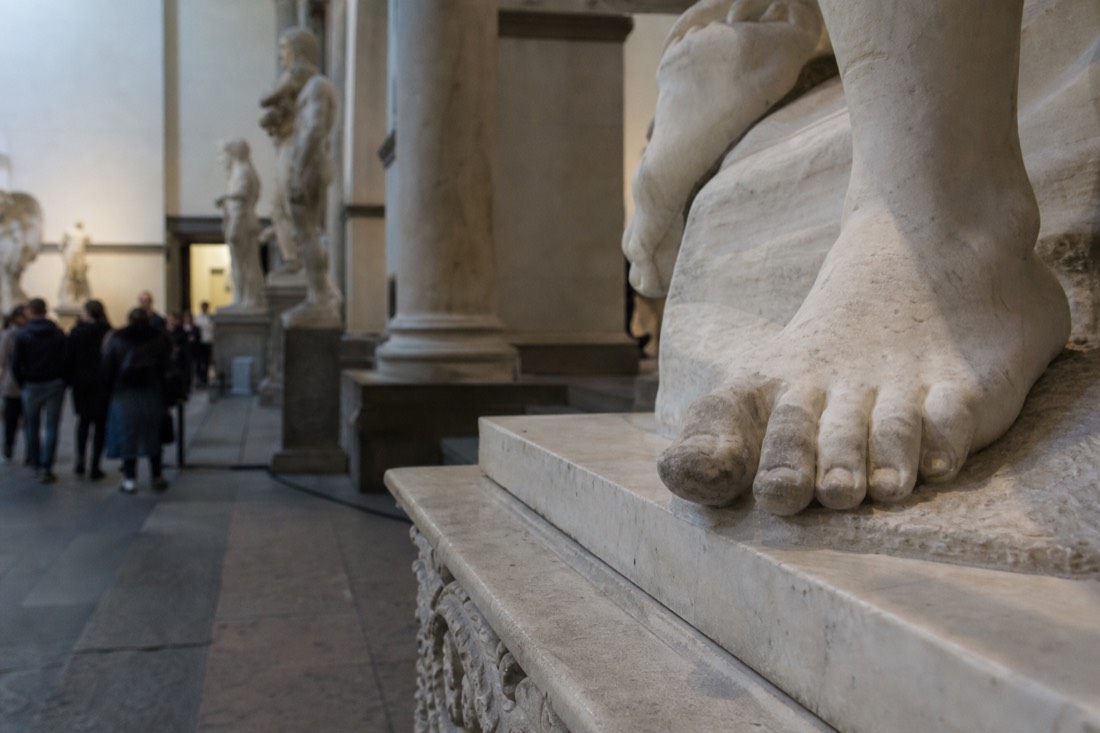
I find this the quietest and most sobering story of the lot, because it happened right here, a few steps from where I stand with guests each week. The attack was not ideological in any coherent way; the man claimed a model told him to do it. What matters for visitors is the aftermath. The recovered marble was reset, the repair is nearly invisible, and the incident is one reason the Accademia now watches David with instruments rather than just eyes.
The event also reframed how the gallery thinks about proximity. There is a discreet perimeter now, and the tribune is designed to keep the crowd at a respectful distance. None of it dampens the encounter. If anything, knowing that toe was broken and mended makes the whole figure feel more mortal.
| The 1991 attack | Detail |
|---|---|
| When | September 1991, inside the Accademia |
| What was damaged | The second toe of the left foot |
| Response | Fragments recovered and reattached by conservators |
| Lasting effect | Closer monitoring and a maintained perimeter |
Why did a Florida school controversy involve the David?
In March 2023 a Florida charter school, Tallahassee Classical, showed sixth-graders an image of David in an art class. Three parents complained, one calling it pornographic, and the principal was pressured to resign over a lack of advance notice. The story went global, and Florence responded by inviting the students and staff to see the real statue.
This is the episode guests bring up most, usually with a rueful smile, because it made international news and it made Florence a little indignant. The city's mayor and the Accademia both offered to host the school community, and visitor interest in David spiked in the weeks that followed. The irony was hard to miss: a lesson meant to teach one of the summits of Western art got recast as a scandal, and the scandal sent more people to look at the marble than any lesson could.
It fits the five-hundred-year pattern exactly. David unsettles someone, a small drama follows, and the statue absorbs it and keeps standing. That durability is a big part of why he remains the most argued-about figure in the museum, a thread I pull on in why David is so famous. When people ask me whether the controversies cheapen him, I say the opposite. A sculpture that can still start a fight after five centuries is a sculpture that is still fully alive.
| Modern flashpoint | Year | Place | How it ended |
|---|---|---|---|
| School art-lesson complaint | 2023 | Florida, USA | Principal resigned, Florence invited the school |
| Censored pizza advertisement | 2023 | Glasgow, UK | Ad withdrawn amid wider debate |
| Image-rights court ruling | 2024 | Florence, Italy | Court affirmed the gallery's image rights |
How do you see the real David for yourself?
Book a timed entry slot before you travel. Walking up without a reservation means the standard unreserved line, commonly 1 to 2 hours in season, while a timed ticket gets you through security in roughly 10 to 20 minutes. Prices run from 20 EUR at the door to the current provider total for a timed skip-the-line ticket.
The whole reason these stories land is that you can stand in front of the actual marble, toe repair and all, in a way no photograph delivers. The museum posts its hours, prices and free days on the official visiting page, and the door price is 20 EUR when slots remain. The catch is that word "remain," because in spring and summer the walk-up line on Via Ricasoli is long and the early slots vanish weeks ahead. The 8:15 opening is the first to fill, every year.
You pick up a paper ticket two minutes from the door, luggage storage is included, and cancellation is free up to 24 hours before. Whether the official channel or a reseller suits you better comes down to flexibility, which I break down in official vs third-party tickets.
I always end the censorship tour on the same note. Every attempt to cover, move, or shame this statue has failed, and the failures are now part of his story. The stones bounced off. The fig leaf never touched the marble. The broken toe healed. The Florida furor filled the tribune. David has survived his admirers and his critics in equal measure, and he is still standing at the end of that long gallery, waiting for the next person to walk up and, inevitably, have an opinion.
Your Next Step
Check Your Florence Date
Accademia With An English Guide
Have your travel date in mind? See David with an English-speaking guide, then stay inside to explore independently. Check the start and meeting details before arranging your next stop.
65 minutes; admission and headsets included. Meet at Via Ricasoli 39, 15 minutes early. No hotel pickup, meals or luggage storage.
Initial editorial suggestion. Confirm the option, party requirements and final total before paying.
Scheduled departures load automatically. Final availability and price are confirmed on Viator.
A scheduled start is not a confirmed place. Your date is a planning aid; select it again on Viator.
No verified option fits those choices. Adjust the controls or reset to the general suggestions.
Compare Options And Fit This To Your Visit
Accademia With An English Guide: See David with an English-speaking guide, then stay inside to explore independently. 65 minutes; admission and headsets included. Meet at Via Ricasoli 39, 15 minutes early. No hotel pickup, meals or luggage storage.
Accademia Timed Entry: Explore David, the Prisoners and the other permanent rooms at your own pace. 60 minutes suggested; allow extra time for security. Meet at Via Ricasoli 45 blue, 15 minutes early; bring matching ID for every visitor. No live guide or luggage storage.
Accademia Entry And Audio Options: Choose an independent visit with a phone audio guide, or select a licensed guided option. About 1 hour. Permanent exhibitions included. Audio and guided inclusions depend on the option selected. Bring ID, a charged phone and headphones; arrive 10–15 minutes early at the option’s meeting point. Large bags prohibited.
Private Accademia Art Tour: Discuss David and the unfinished sculptures with your own art historian guide. 2 hours; admission included. Selected central hotels offer walking pickup, not a car transfer. Confirm your exact hotel or meeting point with the operator.
Affiliate links may earn us a commission at no extra cost to you. Booking is completed with the provider.