2026-07-22
Why Is David So Famous? The Honest Answer
David is famous for four real reasons: a political symbol, a near-impossible carve from an abandoned block, a psychological moment, and 500 years of copies. A Florence guide explains.
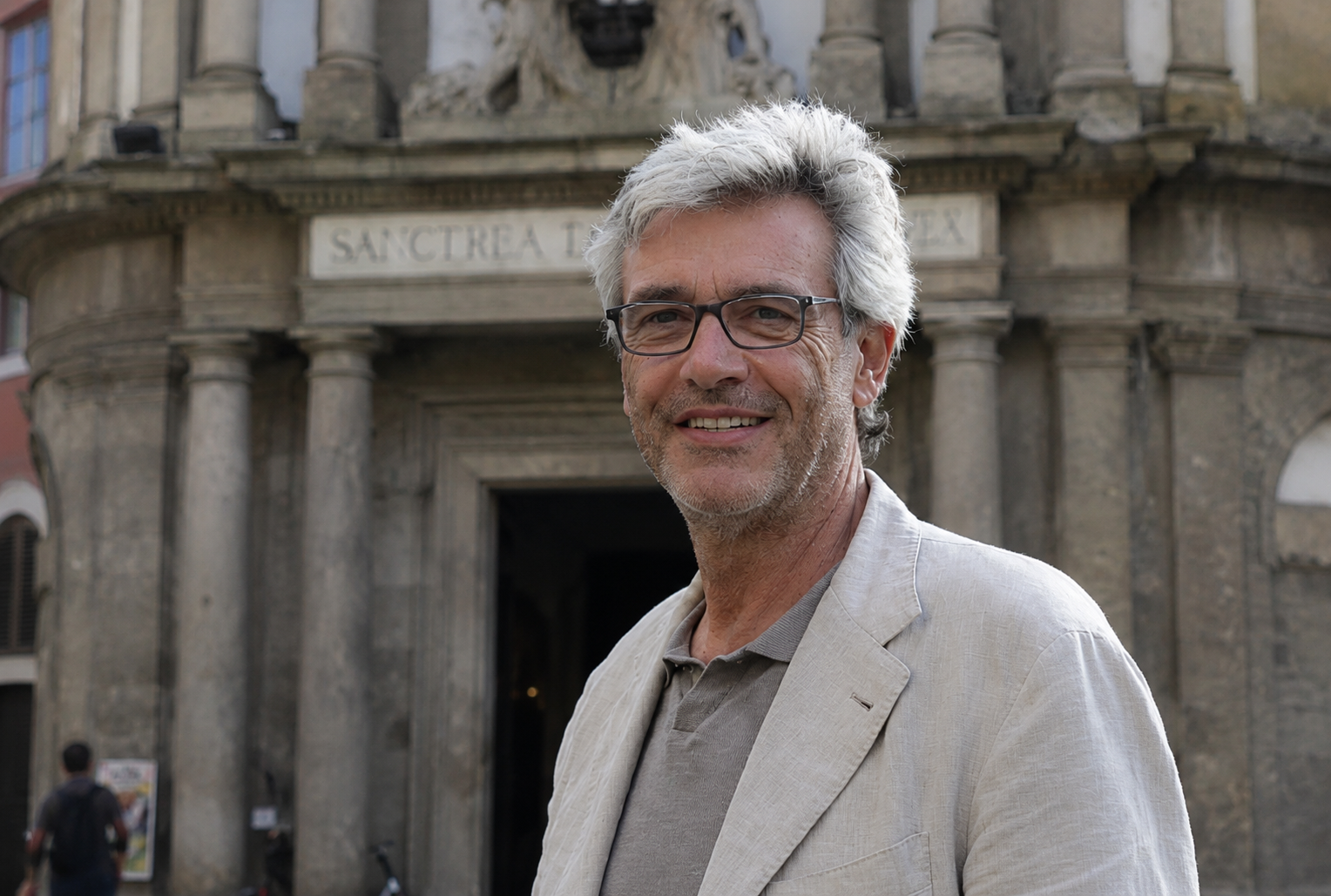 By Luca Moretti, Florence Accademia Gallery guide and skip-the-line specialist
A guest asked me once, in the flattest possible tone, "It's just a naked guy with a slingshot, so why is this the most famous statue on earth?" It is a fair question and it deserves a straight answer, not a shrug about genius. I have stood in front of David several mornings a week for years, and the fame is not an accident of marketing. It is four separate things stacked on top of each other, and any one of them alone would make a memorable statue. Together they made an icon that has outlived the republic that commissioned it.
Why is David so famous?
David is famous for four reasons at once: he was a political symbol of the Florentine Republic, he was carved from a shallow abandoned block most sculptors thought unusable, he captures a psychological moment no earlier David had, and 500 years of copies have spread his image worldwide. Remove any one reason and he is still remarkable. All four make him singular.
Most explanations stop at "it's a masterpiece", which is true and useless. The honest version separates the reasons out, because they came from different places. The politics came from Florence. The technical feat came from the stone. The emotional charge came from Michelangelo's choice of the split second he carved. The global fame came later, from centuries of casts, replicas and reproductions.
| The reason | Where it came from | Why it still lands |
|---|---|---|
| Political symbol | The Florentine Republic, 1501-1504 | The underdog facing a giant, made civic |
| Technical near-impossibility | A shallow block abandoned for decades | One block, no second chances, no joins |
| The psychological moment | Michelangelo's own reading of the story | Tension before the fight, not triumph after |
| Five centuries of copies | Florence and the wider world | The image reached people who never came |
I walk through the making of the statue itself, the 26-year-old sculptor and the 400 florins he was paid, in my full David guide. Here I want to sit with the four reasons, because they are the actual answer to the question.
What did David symbolize for Florence?
David was the emblem of the Florentine Republic. A small city surrounded by larger powers, Florence saw itself in the shepherd boy who beat the giant Goliath with a sling and a stone. Placed outside the seat of government in 1504, David faced the direction of rival Rome, a public warning that the underdog could win.
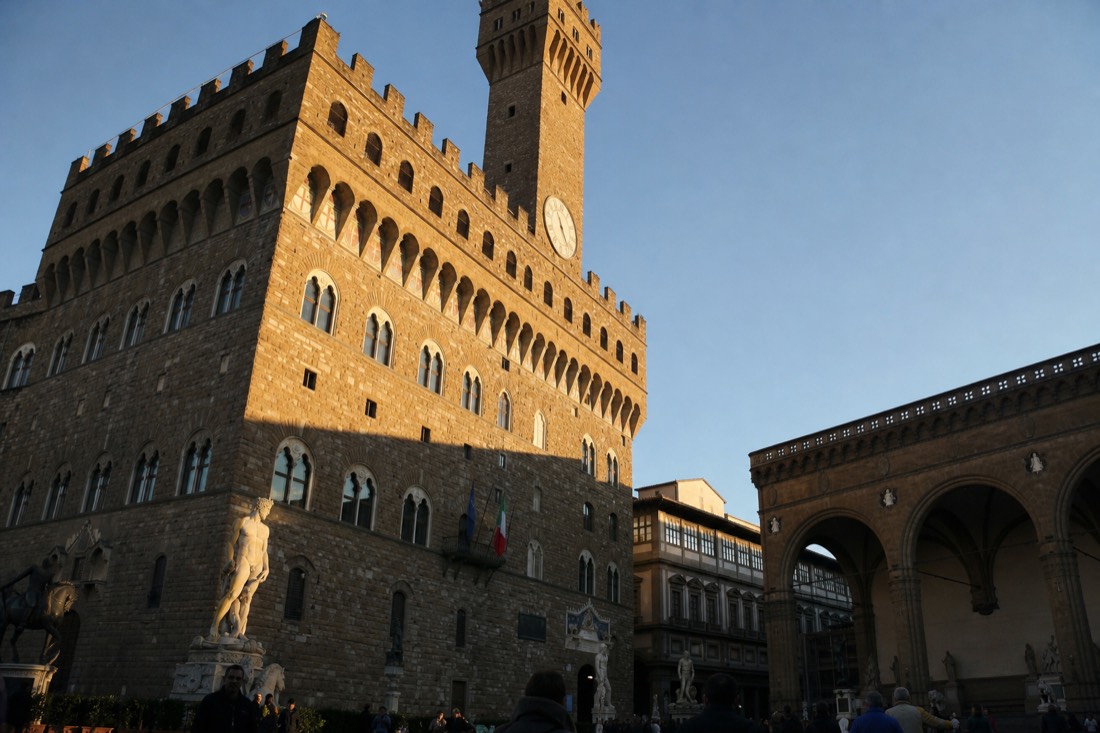
This is the reason people miss most often, because a museum strips the politics away. David was not made as art for art's sake. He was made as a statement by a nervous republic, and Britannica's account of the sculpture describes how Florentines read the biblical underdog as themselves. The statue stood at the entrance of Palazzo Vecchio, the town hall, where every citizen and every visiting diplomat had to pass it. Placing a giant nude of the boy-hero there was the civic equivalent of a headline.
Michelangelo also made a choice that separated his David from every earlier one, and it is the reason the statue feels alive rather than commemorative. He carved the moment before the fight.
| Sculptor's David | The moment shown | The mood |
|---|---|---|
| Donatello's bronze (1440s) | After the victory, foot on Goliath's head | Calm, triumphant, boyish |
| Verrocchio's bronze (1470s) | After, sword in hand | Poised, decorative |
| Michelangelo's marble (1504) | Before, sizing up Goliath | Tense, watchful, deciding |
That shift is everything. David's brow is furrowed, the neck muscles are tight, the sling is already over his shoulder, and he is calculating. You are watching a decision, not a trophy. I compare the two most famous versions side by side in Michelangelo versus Donatello's David, and the difference in chosen moment is the heart of it.
Why was carving David so hard?
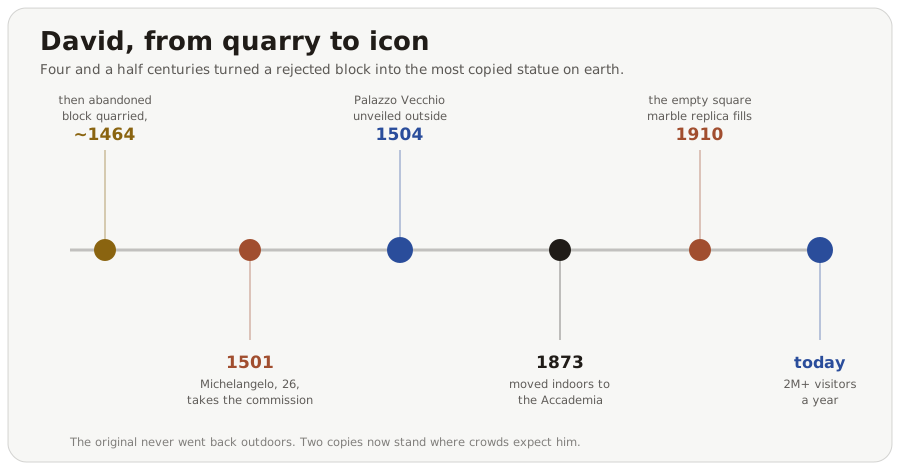
David was carved from a single block of Carrara marble that had been quarried around 1464 and then abandoned for decades. Two earlier sculptors had started and given up on it. The block was tall but unusually shallow and already roughed out, leaving Michelangelo almost no margin for error and no room to correct a wrong cut.
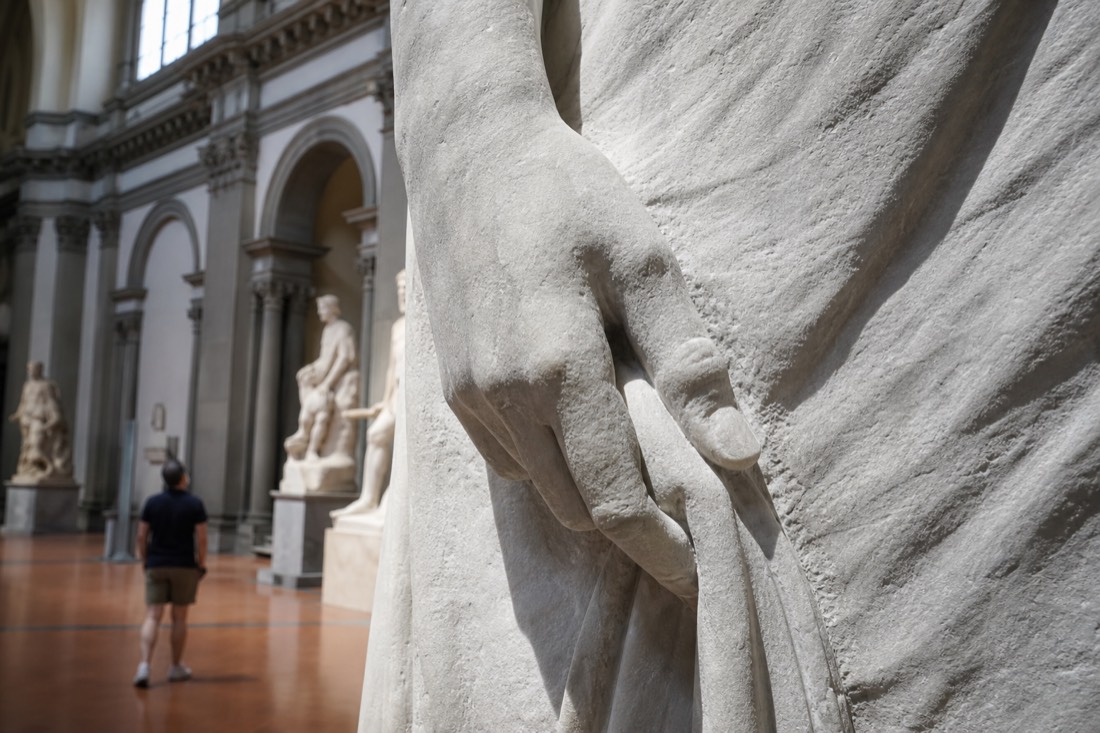
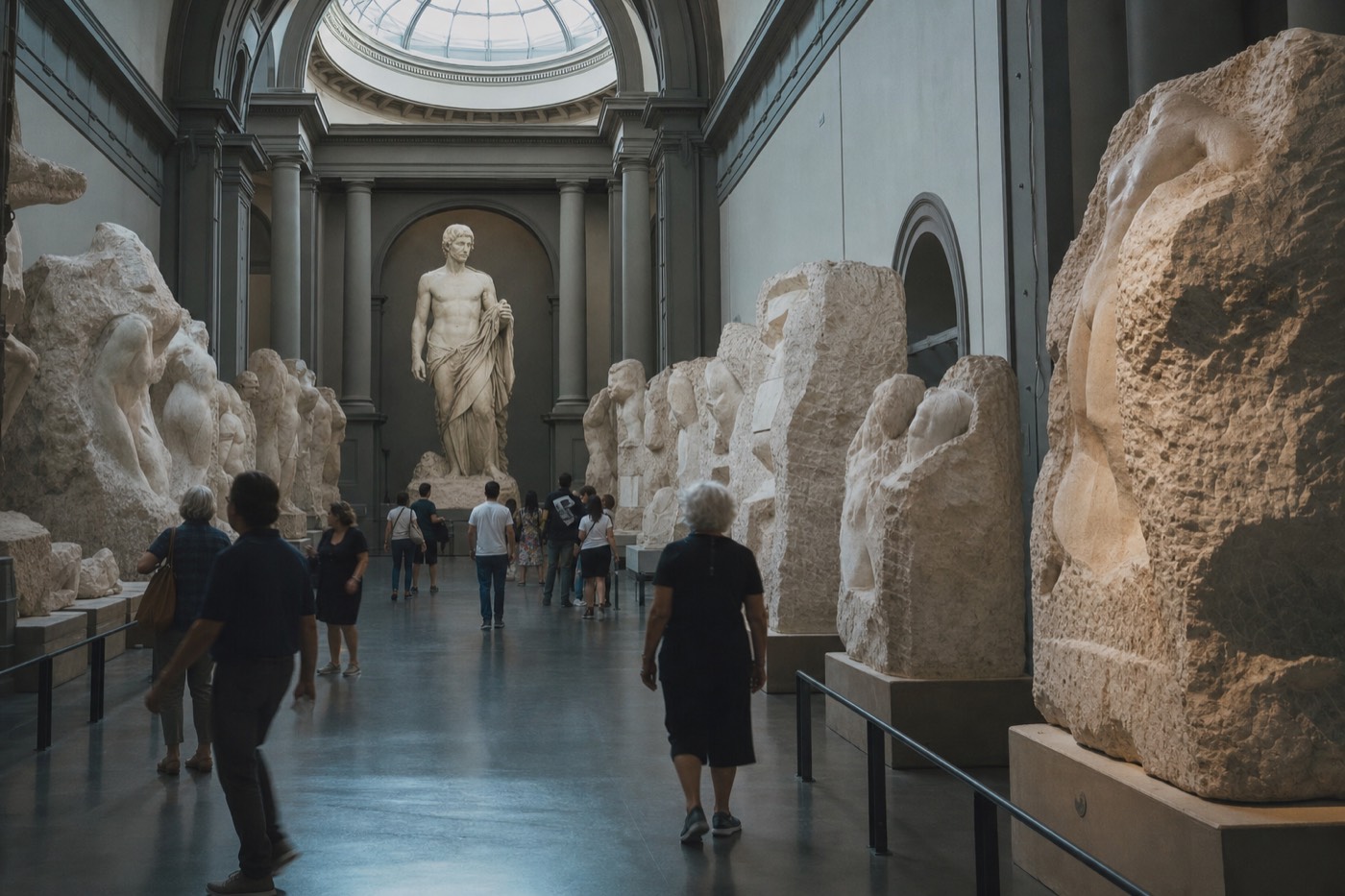
The block has its own history, and it is central to the fame. According to the statue's record, the marble was quarried decades earlier for a different commission, partly worked by Agostino di Duccio and then by Antonio Rossellino, and left exposed in the cathedral workyard for years. Sculptors called it "the Giant" and considered it ruined. The stone was shallow front to back, which is why the finished David is a fairly flat figure when you view him from the side, something you notice in the Tribuna and nowhere in a photograph.
Michelangelo took the commission at 26 and worked the flawed block into a 5.17 meter figure with no joins and no repairs to the body. One block, one attempt.
You pick up a paper ticket two minutes from the door, luggage storage is included, and cancellation is free up to 24 hours before.
| The challenge | The constraint | Why it mattered |
|---|---|---|
| The block's age | Quarried ~1464, exposed for decades | Weathered, thought unusable |
| Previous attempts | Two sculptors had abandoned it | Existing cuts limited the pose |
| The shallow depth | Thin front to back | Forced a near-flat composition |
| Single block | No added marble, no joins | A wrong cut could ruin everything |
How do you see the statue that made him famous?
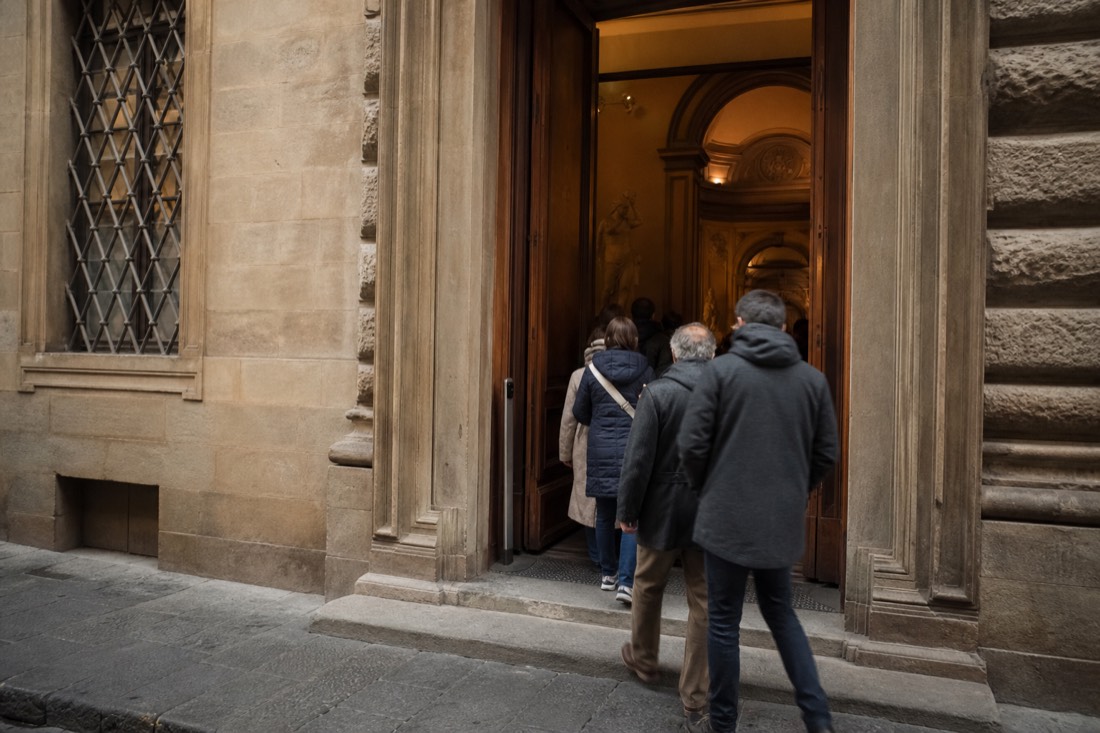
Reserve a timed slot before you go. The walk-up ticket is 20 EUR when slots are left, an official reserved ticket is 24 EUR with the booking fee, and a timed skip-the-line ticket has a provider-set price. A reservation skips the unreserved line, commonly 1 to 2 hours in season, and gets you through security in roughly 10 to 20 minutes.
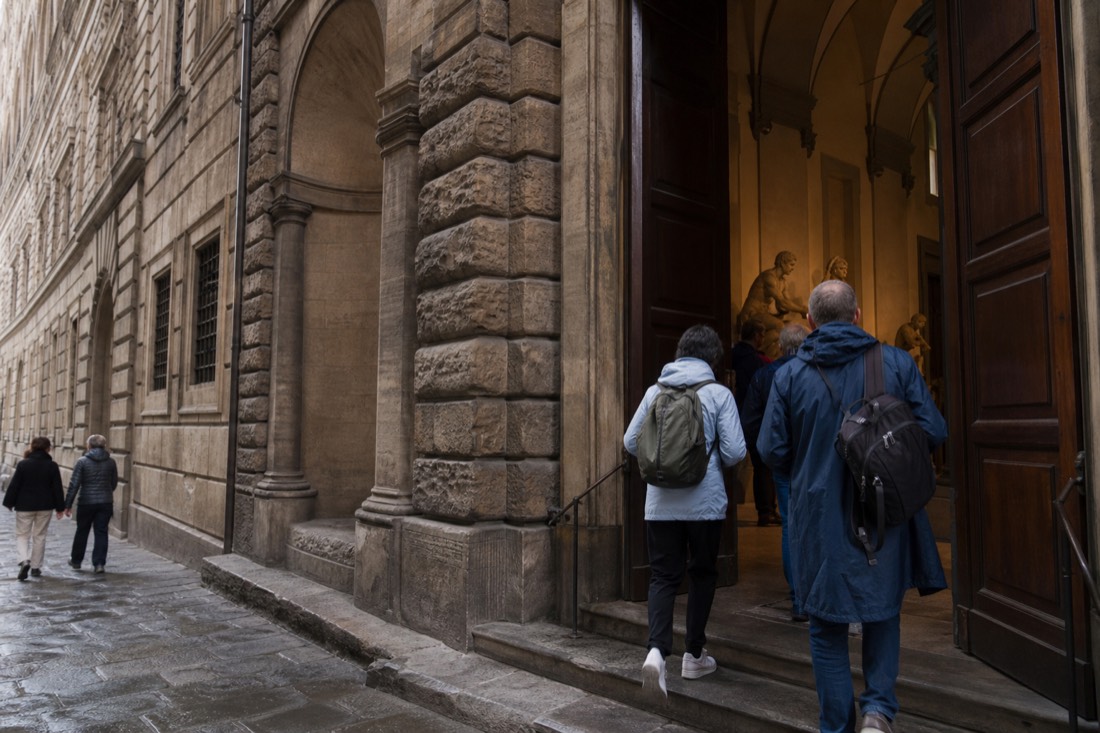
The four reasons David is famous only fully connect when you are in the room with him, at the right height, with the politics and the flawed block and the held breath all present at once. That argues for going early and reserved rather than late and stuck outside. Check the times offered for your date; neither availability nor a quiet room is guaranteed. The museum publishes hours, prices and free days on the official visiting page, and free days carry no reservation, just a long first come, first served line.
| Route in | What you pay | Typical wait |
|---|---|---|
| Walk up without a reservation | 20 EUR | 1-2 hours commonly reported in season |
| Official reserved slot (B-Ticket) | 24 EUR with fee | Security only, usually 10-20 min |
| Timed skip-the-line ticket with host | Current provider price | Ticket pickup plus security, 10-20 min |
| Free day, first Sundays and holidays | 0 EUR | Open-ended line, no reservations exist |
If you would rather compare the official channel against a reseller first, I break it down in official vs third-party tickets.
The fourth reason for the fame, the copies, is also the reason so many people think they have already seen David when they have only seen a replica or a fridge magnet. Those copies spread the image, and they also stripped away the shock the real thing still carries, including a long history of people trying to cover him up, which I collect in the David censorship stories. Stand in front of the original once, at the right distance, and the flat answer to my guest's question dissolves. It is not just a naked guy with a slingshot. It is a whole republic's nerve, cut from a stone nobody else could save.
Your Next Step
Check Your Florence Date
Accademia With An English Guide
Have your travel date in mind? See David with an English-speaking guide, then stay inside to explore independently. Check the start and meeting details before arranging your next stop.
65 minutes; admission and headsets included. Meet at Via Ricasoli 39, 15 minutes early. No hotel pickup, meals or luggage storage.
Initial editorial suggestion. Confirm the option, party requirements and final total before paying.
Scheduled departures load automatically. Final availability and price are confirmed on Viator.
A scheduled start is not a confirmed place. Your date is a planning aid; select it again on Viator.
No verified option fits those choices. Adjust the controls or reset to the general suggestions.
Compare Options And Fit This To Your Visit
Accademia With An English Guide: See David with an English-speaking guide, then stay inside to explore independently. 65 minutes; admission and headsets included. Meet at Via Ricasoli 39, 15 minutes early. No hotel pickup, meals or luggage storage.
Accademia Timed Entry: Explore David, the Prisoners and the other permanent rooms at your own pace. 60 minutes suggested; allow extra time for security. Meet at Via Ricasoli 45 blue, 15 minutes early; bring matching ID for every visitor. No live guide or luggage storage.
Accademia Entry And Audio Options: Choose an independent visit with a phone audio guide, or select a licensed guided option. About 1 hour. Permanent exhibitions included. Audio and guided inclusions depend on the option selected. Bring ID, a charged phone and headphones; arrive 10–15 minutes early at the option’s meeting point. Large bags prohibited.
Private Accademia Art Tour: Discuss David and the unfinished sculptures with your own art historian guide. 2 hours; admission included. Selected central hotels offer walking pickup, not a car transfer. Confirm your exact hotel or meeting point with the operator.
Affiliate links may earn us a commission at no extra cost to you. Booking is completed with the provider.