2026-07-22
How Much Was Michelangelo Paid for David?
Michelangelo was paid roughly 400 florins for David, documented in the cathedral records. What that fee bought in 1504 Florence, and why the statue has no real price today.
 By Luca Moretti, Florence Accademia Gallery guide and skip-the-line specialist
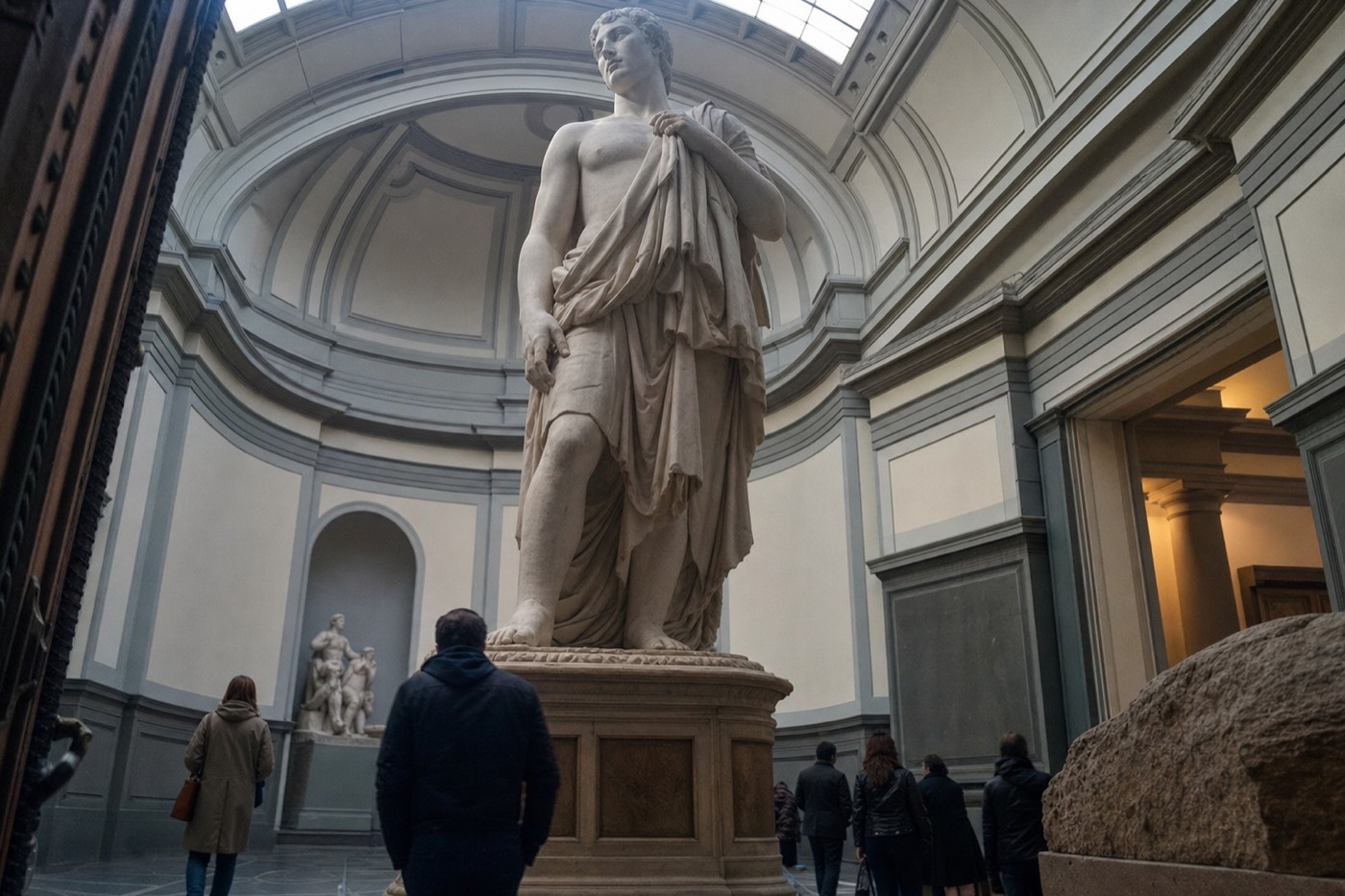
People ask me what David is worth, and the honest answer is that we know almost to the coin what he cost and have no real idea what he is worth. The first number sits in the cathedral account books in a clerk's careful hand. The second one does not exist, because nobody has ever tried to insure a five-meter miracle. I stand groups in front of the plinth and watch the question land: all of this, for how much?
How much was Michelangelo paid for David?
Michelangelo was paid roughly 400 florins in total for David. The 1501 contract set a salary of six florins a month for a job expected to run about two years, and when the carving ran long the cathedral board eventually settled the whole account at around four hundred gold florins.
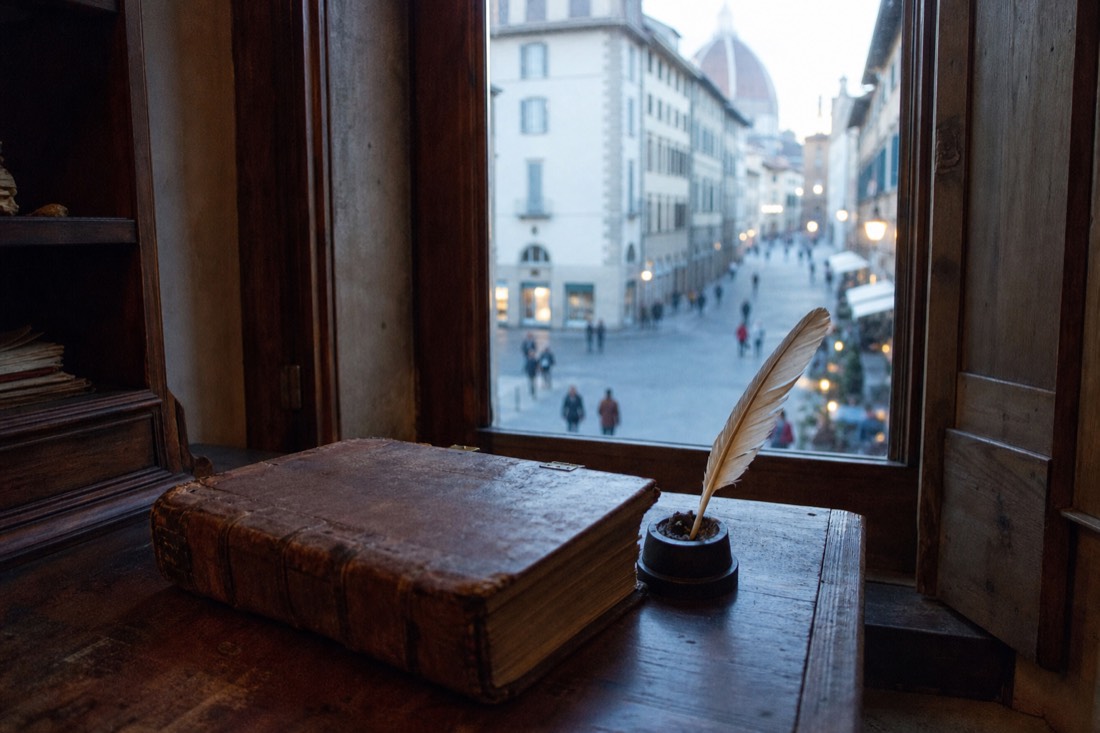
The commission came from the Operai, the works board of the cathedral, with the wool guild behind them. The terms are preserved in the contract records and summarized on Wikipedia's page for the statue: a two-year window and six florins a month. Like most deadlines attached to Michelangelo, that one stretched. He was 26 when he started cutting in September 1501, and the figure was not finished until the middle of 1504, so the six-florins-a-month arithmetic never really held.
| David, the payment terms | |
|---|---|
| Contract signed | 16 August 1501 |
| Monthly salary agreed | 6 florins |
| Expected duration | About 2 years |
| Actual carving time | Roughly 2.5 years |
| Michelangelo's age at start | 26 |
| Total finally paid | Around 400 florins |
What tips a monthly wage into a four-hundred-florin settlement is the overrun plus the board's decision, once they saw what they had, that the original figure looked mean. The number matters less as a paycheck than as a window. Four hundred florins in 1504 was a serious sum, the kind of money that bought property, and it is the closest thing we have to a receipt for a statue that later stopped having a price at all.
What could 400 florins buy in 1504 Florence?
A great deal. A gold florin held about 3.53 grams of gold, and in the wage tables historians use for Florence, a single florin bought on the order of ten to thirteen days of unskilled labor. On that scale four hundred florins represented years of an ordinary working income, not a tip.
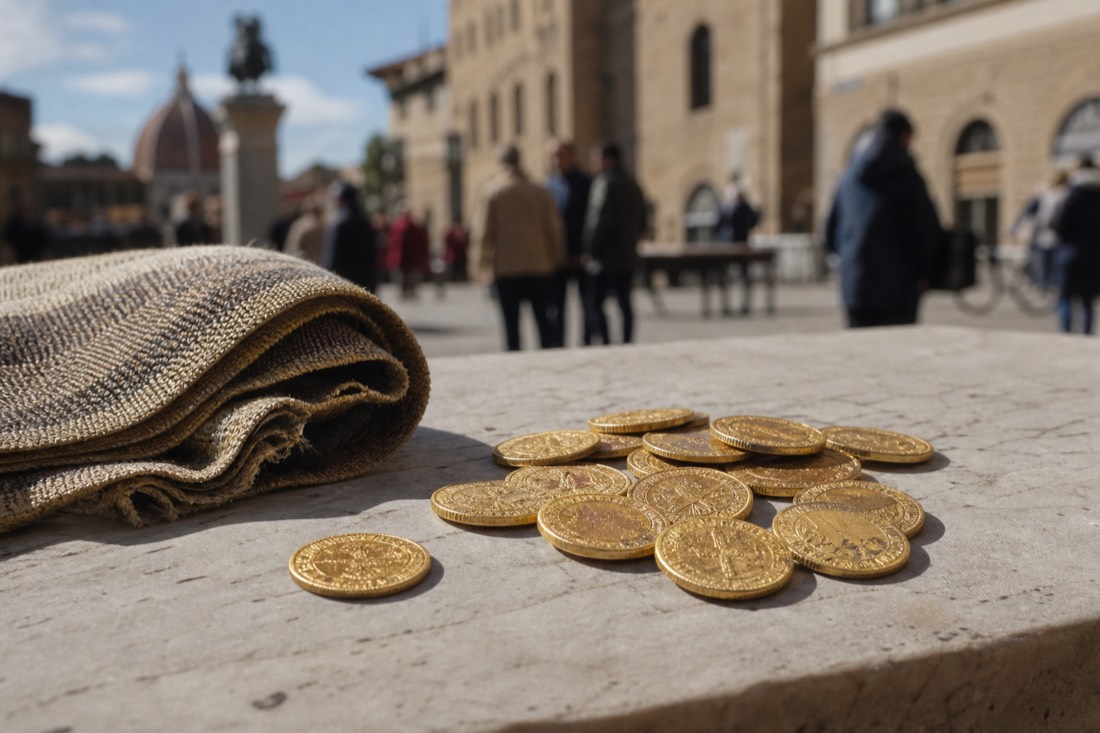
I am careful here, because this is exactly where people invent numbers. There is no clean 1504-to-2026 exchange rate, and anyone who quotes you one to the dollar is guessing. What we can say rests on real records. The florin was a fixed-weight gold coin, and Florentine wage lists let historians express prices in labor: how many days a laborer worked to earn one coin. Those tables put a florin well above a day's pay for common work, which is why a purse of four hundred was life-changing.
| One florin, in real terms | Figure on record |
|---|---|
| Gold content | About 3.53 grams |
| Unskilled labor it bought | Roughly 10-13 person-days |
| Coin type | Fixed-weight Florentine gold florin |
Set against rent, bread and cloth, David's fee reads less like an art price and more like a salary for a small firm over several years. That framing helps me answer the follow-up I always get, which is whether he was underpaid. Compared to a wage, no. Compared to what came next in his own career, the picture shifts.
How does the David fee compare to Michelangelo's other work?
It was modest by his later standards. Records commonly cite 3,200 florins for painting the Sistine Chapel ceiling, roughly eight times the David figure. David was the breakthrough that made those later fees possible, so the low number is really the price of a 26-year-old proving what he could do.
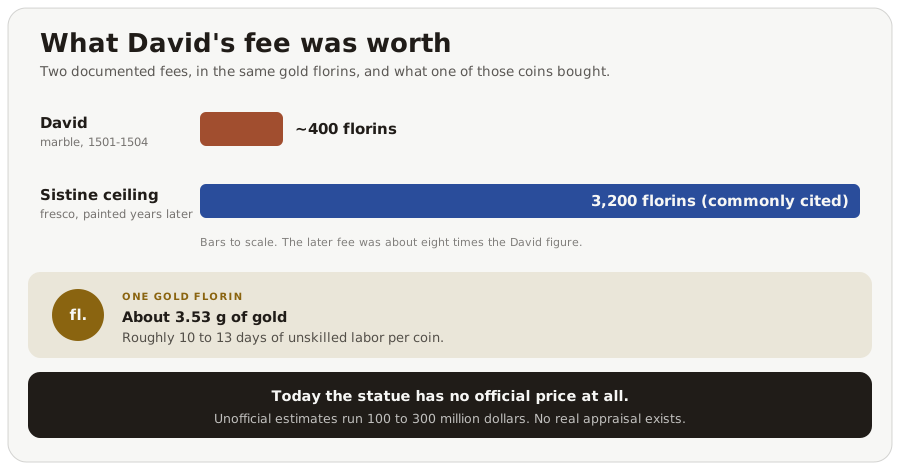
The comparison needs a caveat, and I give it every time. A wall-and-ceiling painting commission and a single marble figure are different jobs, with different materials, assistants and years attached, so eight-to-one is not a straight insult. Still, the gap tells the truth about bargaining power. In 1501 Florence was taking a chance on a young carver. By the time the Vatican wanted its ceiling, Michelangelo set terms.
| Work | Fee on record | Medium |
|---|---|---|
| David | Around 400 florins | Marble |
| Sistine Chapel ceiling | 3,200 florins (commonly cited) | Fresco |
For the fuller story of how David turned a promising sculptor into the name popes fought over, I keep a companion piece on why David became so famous. The short version is that the statue did more for Michelangelo's price than any patron ever did. It also explains why the question people really want answered is not the historical fee but the modern one.
Is there a modern price or insurance value on David?
No official one exists. The Accademia does not put David up for sale or carry a market valuation on him, and the figures you see online, often quoted between 100 and 300 million dollars, are unofficial estimates, not a real appraisal. In practice the statue is treated as literally priceless, and that is the honest answer.

I want to be plain about this, because it is where confident-sounding nonsense spreads. When a guest tells me David is worth some exact sum, I ask where that came from, and the trail always runs cold. There is no auction record, because state-owned masterpieces of this rank do not sell. The dollar ranges floating around are the kind of estimate a travel site prints to satisfy curiosity, not an insurer's line. Britannica's entry on the sculpture sticks to what is knowable, the history and the marble, and stays out of the pricing game for good reason.
So the two numbers sit at opposite ends. On one side, a documented 400 florins, real, verifiable, paid. On the other, a blank, because you cannot price a thing the world has agreed not to sell. If you are comparing your own outlay, a real ticket versus the many resale sites, I lay that out in the official versus third-party tickets breakdown.
How do you see the statue that money bought?
Book a timed slot and come early. A full ticket is 20 euros plus a 4 euro reservation fee, the gallery closes on Mondays, and the first morning slots go first in spring. The fee that carved David is history. The fee to stand in front of him is small, and the crowd is the only variable.
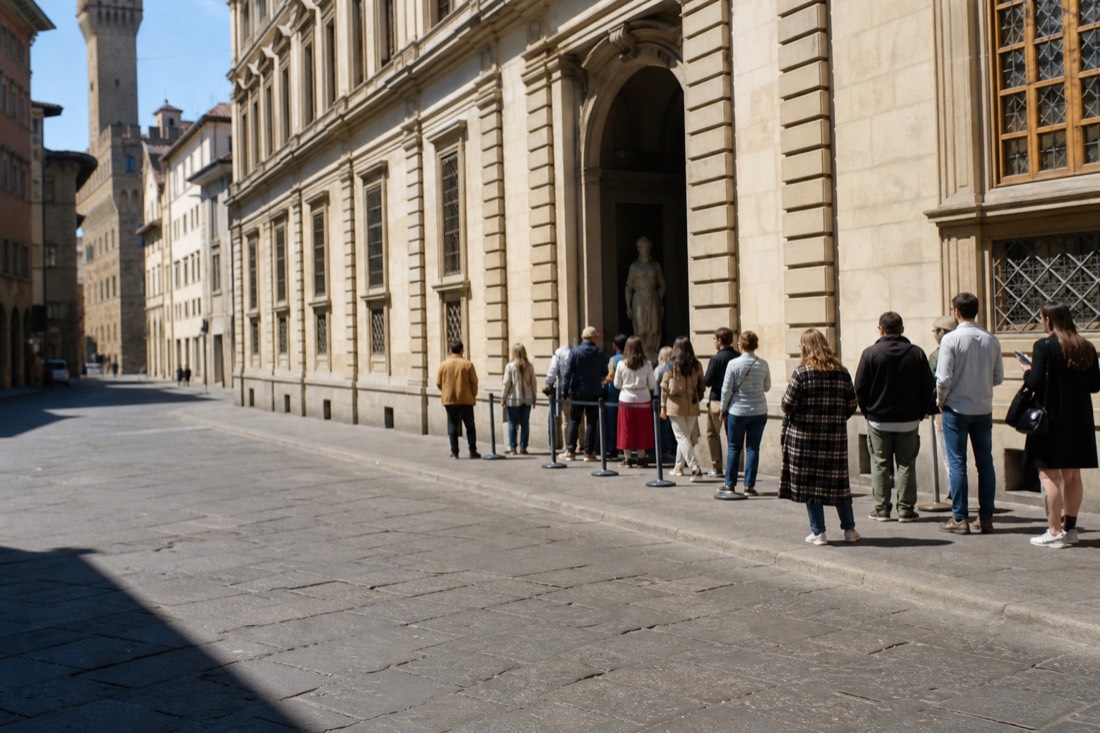
The current prices, hours and free days live on the official visit page, and the queue math is the part worth planning around. Without a reservation the ticket line commonly runs one to two hours in season. With a timed slot you face only the security check, usually ten to twenty minutes. That difference is the whole reason to book ahead, and it is bigger in spring than any other time.
| Planning detail | The current picture |
|---|---|
| Full ticket | 20 EUR, plus 4 EUR reservation fee |
| Reduced, EU citizens 18-25 | 2 EUR |
| Under 18 | Free |
| Closed | Mondays, 1 January, 25 December |
| Walk-up line in season | Commonly 1-2 hours |
| With a timed slot | Security only, usually 10-20 minutes |
If you want the human backstory that goes with the money, my notes on Michelangelo the man for the audio-guide crowd fill in the rest, and the full carving timeline sits in how long David took to carve.
Four hundred florins bought a statue that stopped having a price the day it was finished. Your ticket buys ten minutes at its foot, which is the only part of this equation you can still act on.
Your Next Step
Check Your Florence Date
Accademia With An English Guide
Have your travel date in mind? See David with an English-speaking guide, then stay inside to explore independently. Check the start and meeting details before arranging your next stop.
65 minutes; admission and headsets included. Meet at Via Ricasoli 39, 15 minutes early. No hotel pickup, meals or luggage storage.
Initial editorial suggestion. Confirm the option, party requirements and final total before paying.
Scheduled departures load automatically. Final availability and price are confirmed on Viator.
A scheduled start is not a confirmed place. Your date is a planning aid; select it again on Viator.
No verified option fits those choices. Adjust the controls or reset to the general suggestions.
Compare Options And Fit This To Your Visit
Accademia With An English Guide: See David with an English-speaking guide, then stay inside to explore independently. 65 minutes; admission and headsets included. Meet at Via Ricasoli 39, 15 minutes early. No hotel pickup, meals or luggage storage.
Accademia Timed Entry: Explore David, the Prisoners and the other permanent rooms at your own pace. 60 minutes suggested; allow extra time for security. Meet at Via Ricasoli 45 blue, 15 minutes early; bring matching ID for every visitor. No live guide or luggage storage.
Accademia Entry And Audio Options: Choose an independent visit with a phone audio guide, or select a licensed guided option. About 1 hour. Permanent exhibitions included. Audio and guided inclusions depend on the option selected. Bring ID, a charged phone and headphones; arrive 10–15 minutes early at the option’s meeting point. Large bags prohibited.
Private Accademia Art Tour: Discuss David and the unfinished sculptures with your own art historian guide. 2 hours; admission included. Selected central hotels offer walking pickup, not a car transfer. Confirm your exact hotel or meeting point with the operator.
Affiliate links may earn us a commission at no extra cost to you. Booking is completed with the provider.