2026-07-22
Michelangelo's David: The Guide Worth Reading Before You Stand Under It
Why David is famous, the story of the abandoned block, the oversized hands and head, the 1873 move, and exactly what to look for when you stand under him.
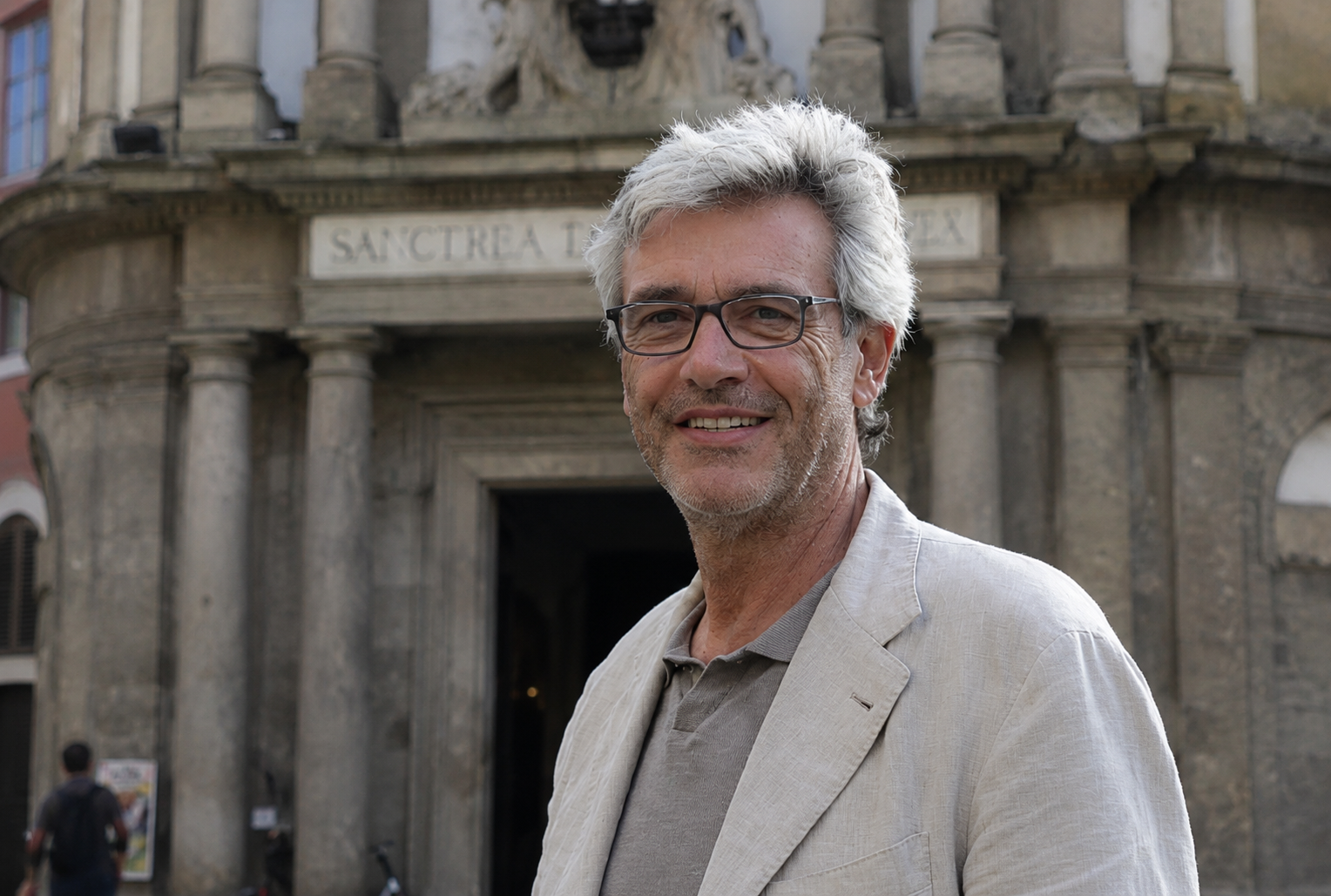 By Luca Moretti, Florence Accademia Gallery guide and skip-the-line specialist
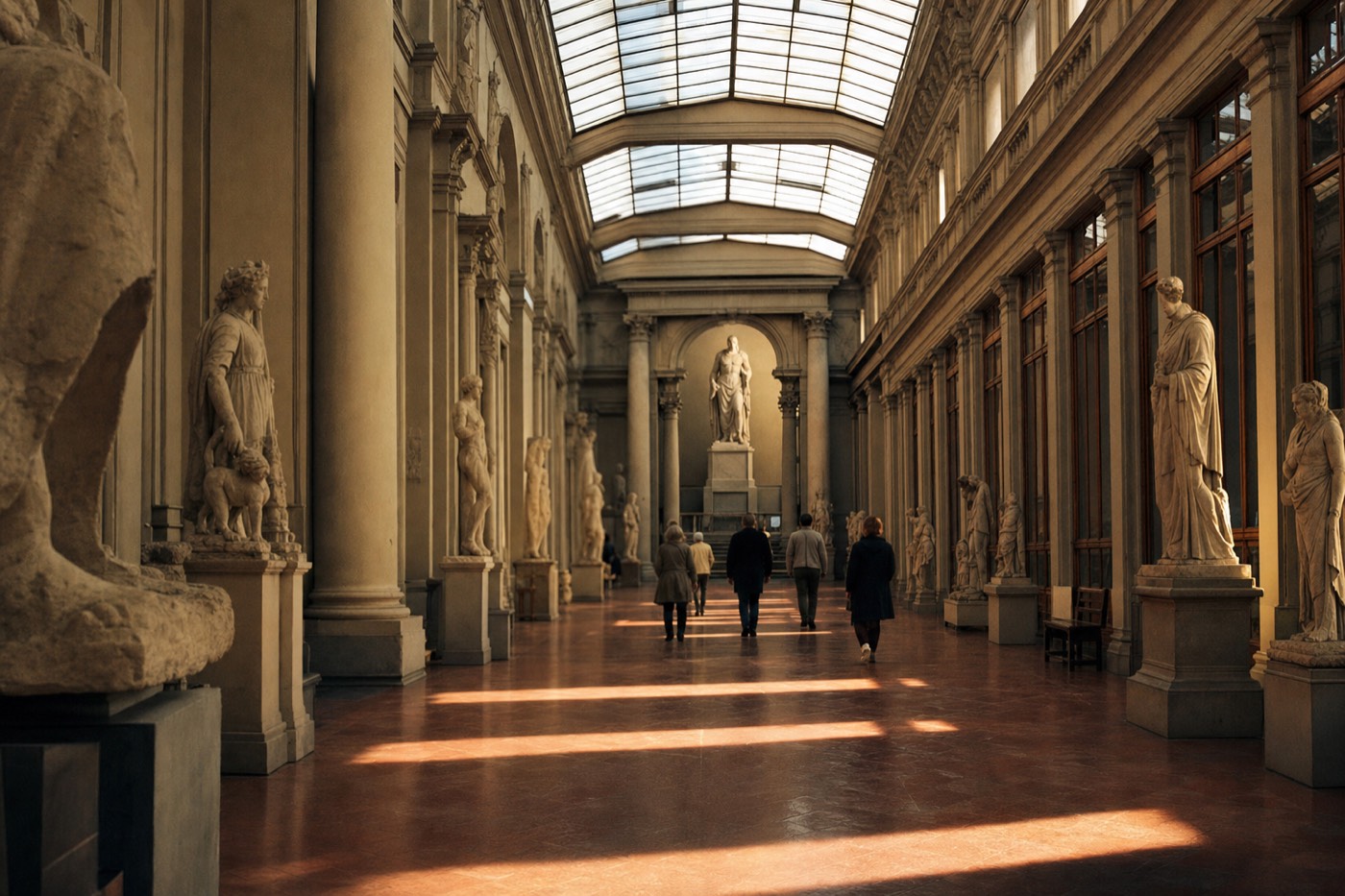
Halfway down the corridor of the Prisoners, almost every guest I bring stops listening to me. I do not take it personally. At the end of that corridor, under a dome of grey Florentine daylight, stands five metres of marble that has been stopping people mid-sentence since 1504. I have walked groups into that room most weeks since 2022, and the silence still lands the same way. This is the explainer I wish every visitor read on the train in: why he matters, how he nearly did not exist, and what to actually look at once your eyes adjust.
Why is David so famous?
David is famous because four different superlatives meet in one object: a political symbol of the Florentine Republic, a technical feat carved from a block two sculptors had rejected, a psychological portrait of the moment before violence, and the most copied statue on earth. Each alone would earn a museum room. Together they made an icon.
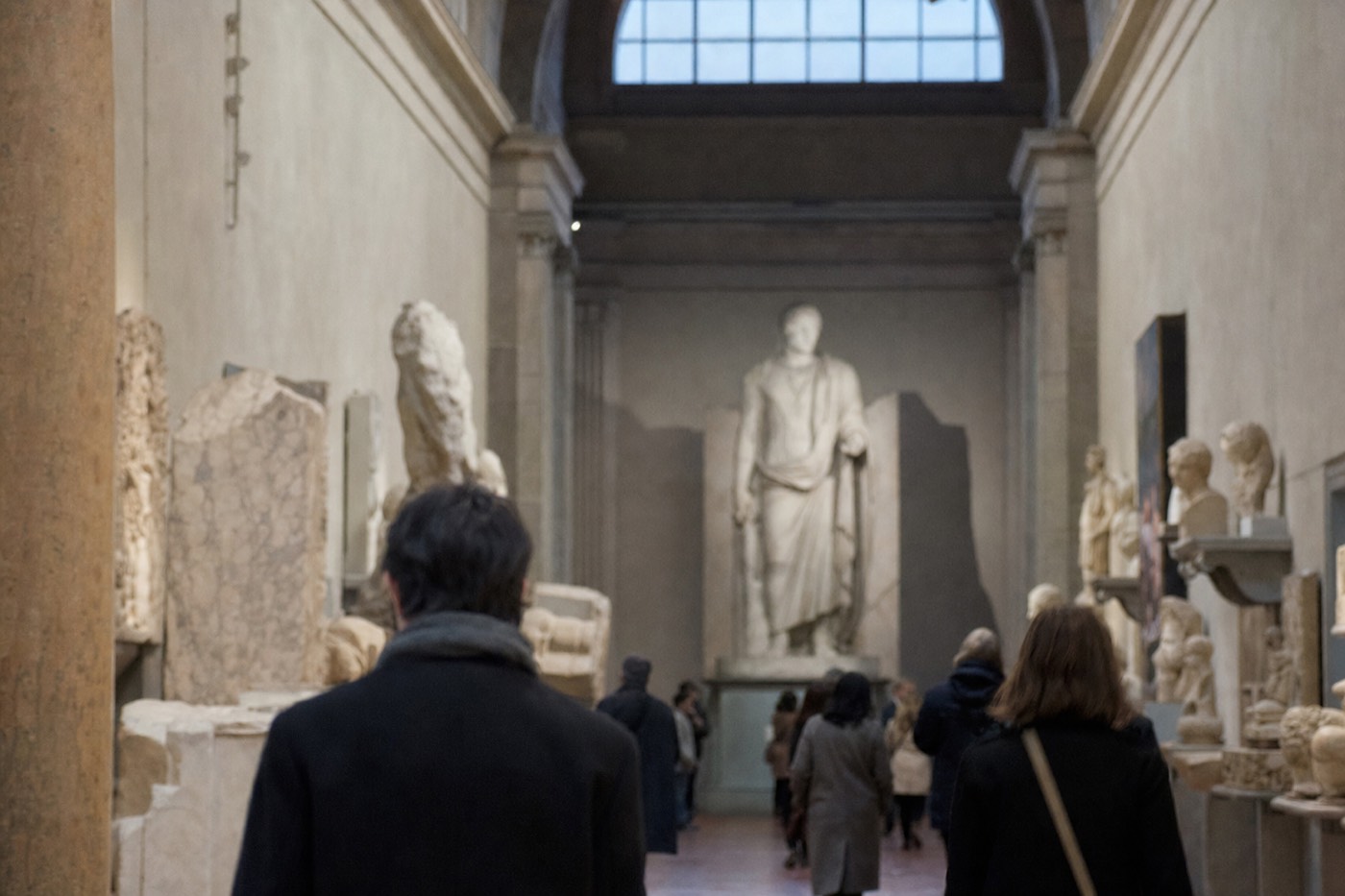
Start with what he is not. He is not famous simply for being large, though how tall David really is surprises nearly everyone. He is not famous for being pretty, though he is. Britannica calls him one of the most renowned works of the Renaissance, and the reasons stack. Florence in 1501 was a fragile republic surrounded by larger powers, and a young shepherd who faced down a giant was exactly the story the city wanted told in stone. Then there is the sheer improbability of the carving itself, which we will get to, because the block had defeated two professionals before Michelangelo touched it.
And there is the face. Donatello and Verrocchio had both sculpted David triumphant, sword in hand, Goliath's head at his feet. Michelangelo chose the minute before. The brow is tight, the neck tendons flare, the weight rocks back on the right leg. You are not looking at a winner. You are looking at someone deciding whether he can win, and that is a feeling every person in the room has had. Five centuries of engravings, casts, fridge magnets and memes did the rest of the distribution work.
What is the story behind the statue?
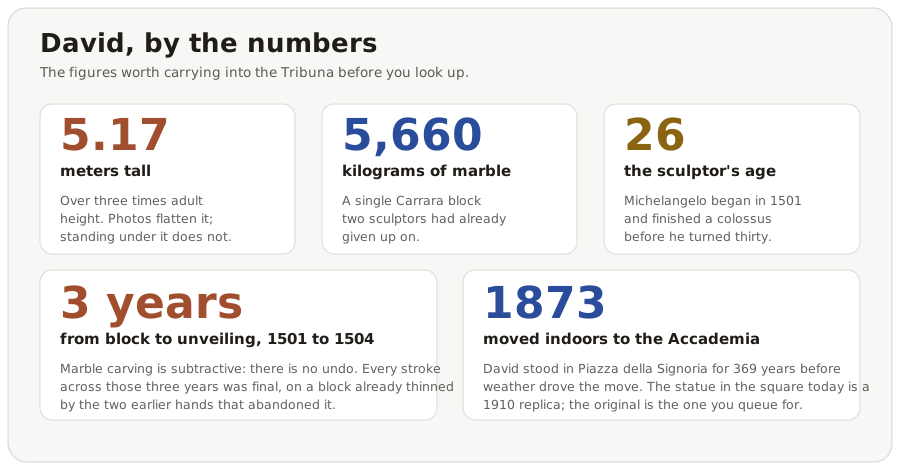
The story is a rescue. A huge Carrara marble block, quarried for the cathedral, was abandoned by Agostino di Duccio in the 1460s and again by Antonio Rossellino in 1476, then left in a workshop yard for a generation. In 1501 the 26-year-old Michelangelo took it on and carved David from it in about three years.
The block even had a nickname, il Gigante, the Giant, and a reputation as a ruined piece of stone. Wikipedia's account traces the whole saga: the cathedral's overseers ordered the figure for the roofline, Agostino roughed out the legs and gave up, Rossellino's contract went nowhere, and the marble lay exposed to Florence's weather for roughly 25 years. When the commission was revived in 1501, the young man who had just carved the Pietà in Rome convinced the committee he could save it. His total pay came to roughly 400 florins for what became three years of work.
| Year | Who had the block | What happened |
|---|---|---|
| 1464 | Agostino di Duccio | Began a David for the cathedral roofline, roughed the legs, abandoned it |
| 1476 | Antonio Rossellino | Took over the contract, did little, walked away |
| 1476-1501 | Nobody | The Giant lay in the cathedral workshop yard, weathering |
| 1501 | Michelangelo, age 26 | Won the commission and began carving in September |
| 1504 | The city of Florence | Finished figure unveiled outside the Palazzo Vecchio in September |
When the statue was finished, the question of where to put it was serious enough that Florence convened a committee including Leonardo da Vinci and Botticelli. The cathedral roofline was quietly forgotten. He went instead to the front of the Palazzo Vecchio, the seat of government, displacing Donatello's Judith. A statue planned as church decoration had become a political statement, which tells you how the city itself understood him.
Why are David's hands and head too big?
The head and right hand are enlarged mostly because of where the statue was meant to stand: high on the cathedral, viewed from far below, where distance would shrink the upper body. The shallow, pre-carved block constrained him too. What reads as a flaw at eye level was calibration for a viewpoint that never happened.
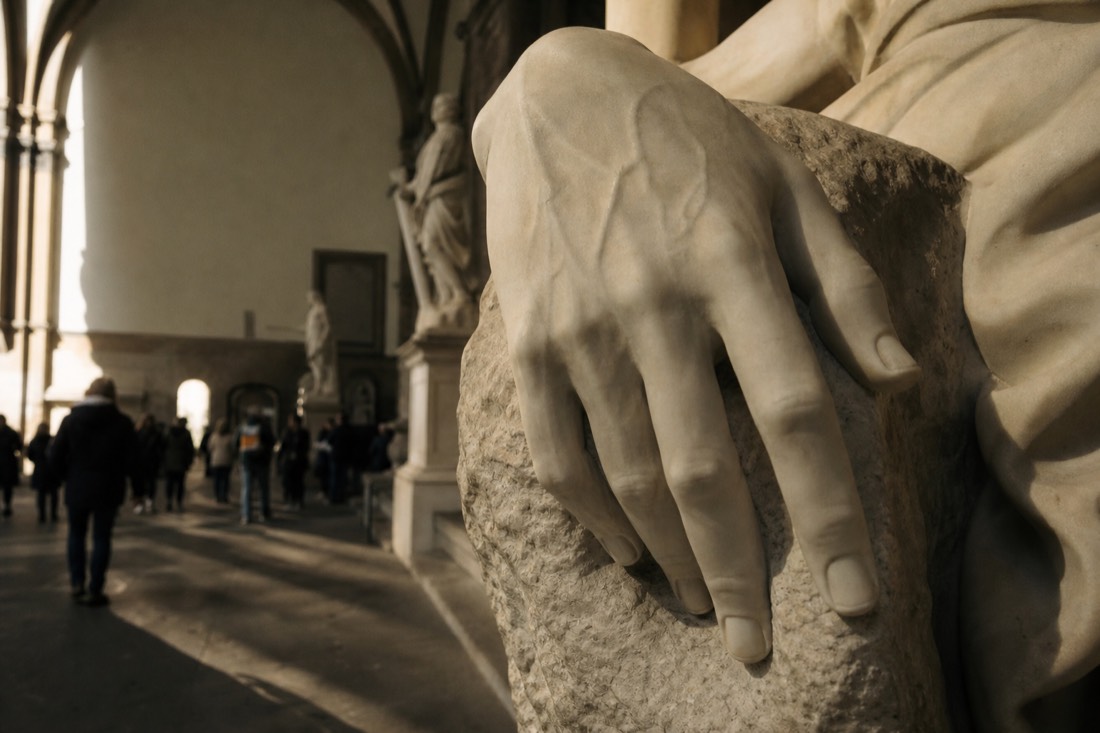
Guests ask me this almost daily, usually in a whisper, as if pointing out a mistake in front of the artist. It is no mistake. A figure destined for a buttress dozens of metres up needs its expressive parts, the face and the hands, exaggerated so they survive the foreshortening. Michelangelo was carving for an audience craning their necks from street level.
There is a second, harder constraint. The Giant was unusually shallow for its height, and Agostino's early gouging had already committed the position of the legs. Michelangelo had to fit his composition inside someone else's abandoned decisions, which is partly why David is so frontal, so flattened, compared with the spiralling figures Michelangelo carved later. Some historians add a third reading, that the swollen right hand deliberately echoes the medieval nickname for David, manu fortis, strong of hand. I offer that one to guests as an interpretation, not a fact, because that is what it is.
Here is the practical payoff: the "errors" vanish when you view him correctly. Stand well back, near the corridor entrance, and let your eye travel up. The proportions settle. He was tuned for distance and low angles, and the room rewards anyone who gives him both.
Where does David stand today, and why did he move in 1873?
The original David stands in the Tribuna of the Accademia Gallery, Via Ricasoli 60, and has since 1873. After 369 years outdoors he was moved to protect the weathering marble. The statue outside the Palazzo Vecchio is a 1910 marble replica, and the bronze on Piazzale Michelangelo dates from 1875.
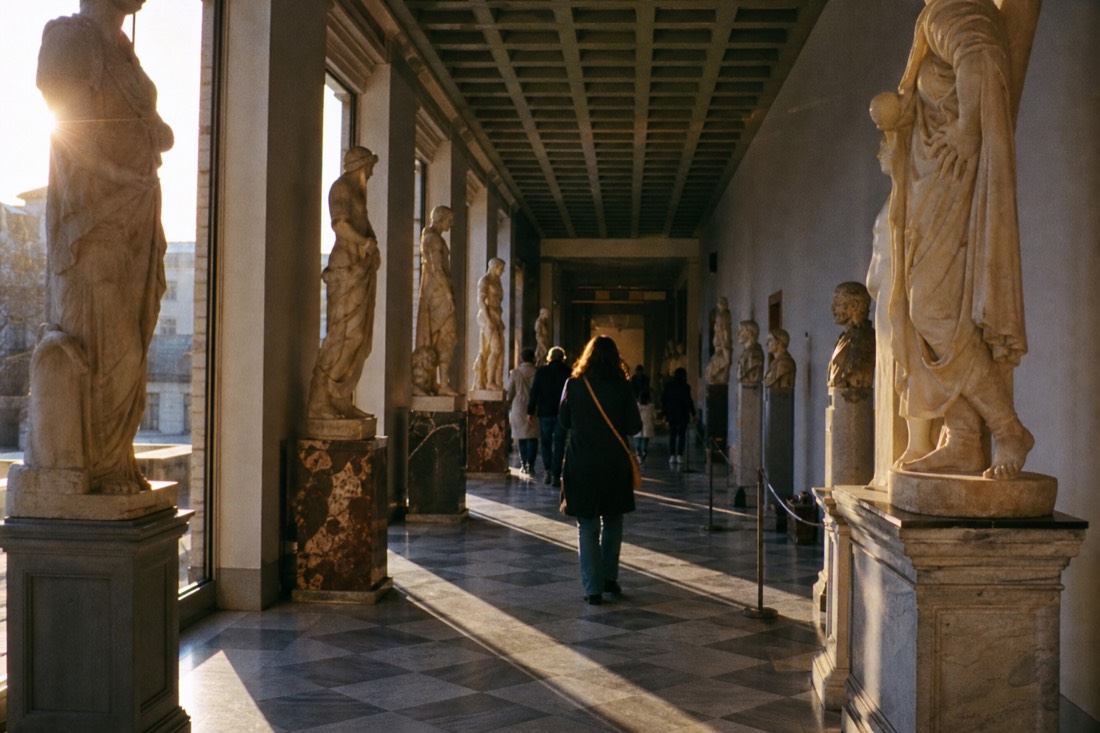
Three and a half centuries in a piazza are unkind to marble. Rain, frost and pigeons did slow damage, and people did faster damage: during a riot in 1527 a bench thrown from the Palazzo Vecchio broke his left arm in three pieces, a repair you can still find if you know to look. By the 1870s the city accepted that its emblem was dissolving in public and rolled him up the street to the Accademia on greased rails, a journey of several days for something this heavy. He then waited in a wooden crate for years while the skylit Tribuna was finished around him in 1882, a room designed for exactly one tenant.
| The David you're looking at | Where | What it is |
|---|---|---|
| The original marble | Tribuna, Accademia Gallery, Via Ricasoli 60 | Michelangelo's 1501-1504 statue, indoors since 1873 |
| Piazza della Signoria figure | Outside the Palazzo Vecchio | Marble replica installed in 1910 on the original spot |
| Piazzale Michelangelo figure | Terrace above the Oltrarno | Bronze cast, in place since 1875, green with age |
Every season I meet travellers who photographed the piazza replica and left town believing they had seen him. If you want the full story of the two impostors and how to tell them apart, I keep it in where the real David actually is. The short version: if you did not pass a security scanner and a ticket check, you saw a copy.
Current reviews are shown on the provider page, and the free luggage storage quietly solves the museum's strict bag rules.
What should you look for in person?
Skip the front-on selfie angle first. Walk the full circle and hunt details: the divergent eyes, the sling running over the left shoulder to the stone hidden in the right hand, the raised veins on that hand, the tension in the right calf, and the repaired left arm and struck toe, scars of 1527 and 1991.
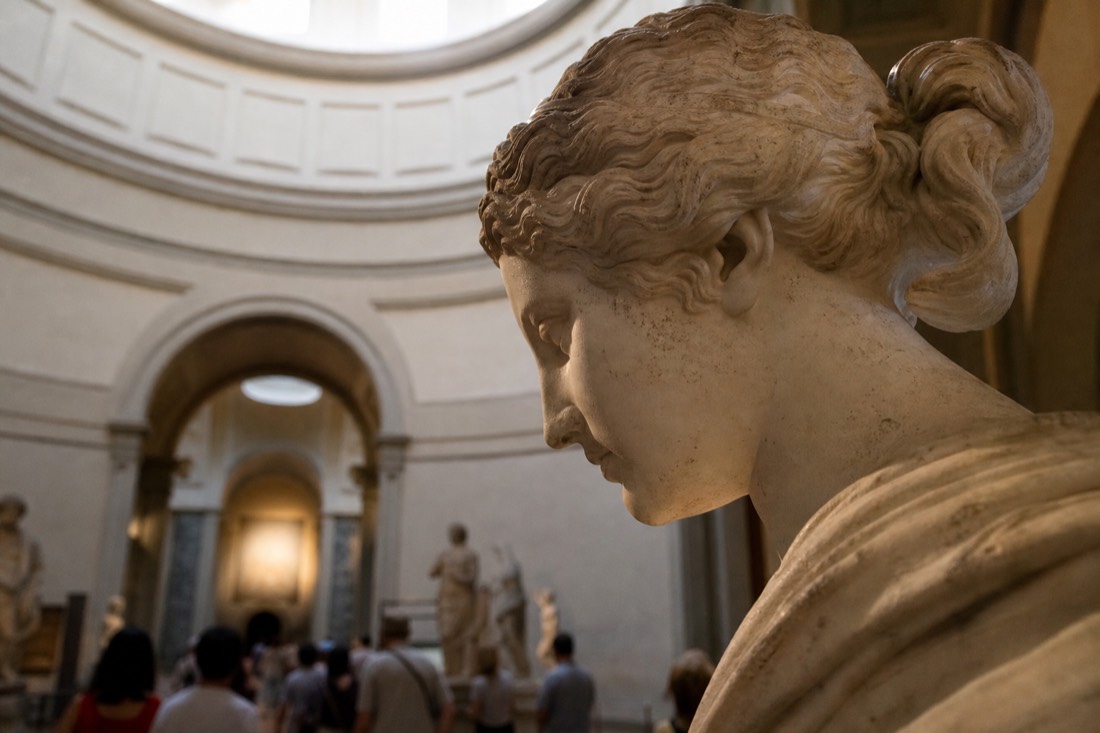
The room gives you 360 degrees. Most visitors use about 40 of them. If you would rather have someone read the marble aloud as you circle it, a live-guided Accademia tour is a separate booking from the entry ticket, and you can book it here. Here is the circuit I walk with guests, and where to stand for each detail.
| Detail | Where to stand | What you're seeing |
|---|---|---|
| The eyes | Slightly to his right, look up | The two eyes do not track together, something I point out weekly and laser scans have mapped |
| The sling | Behind and left | The strap crosses the back to his left shoulder; the whole weapon is nearly hidden |
| The right hand | Front right | Enlarged, veins standing proud, the stone cupped against the thigh |
| The left arm | Front left | Broken in three by a thrown bench in the 1527 riot, seamed back together |
| The left foot | At the rail | A hammer attack in 1991 damaged a toe; conservators rebuilt it |
| The tree stump | Behind the right leg | A structural support, marble cannot hold five tonnes on two ankles alone |
Give the face real time. From straight on he reads calm, almost serene, and from his left profile the same features turn anxious, the brow harder, the mouth set. It is the whole before-the-fight idea working in three dimensions. Then, on your way out, slow down for the four unfinished Prisoners you rushed past on the way in. Their half-emerged bodies, meant for a papal tomb and abandoned, are the best lesson anywhere on how David got out of his own block, and I have written about the Prisoners and why they are unfinished separately.
How do you see him without the line?
Book a timed entry slot. The walk-up ticket queue commonly runs 1 to 2 hours in season, while timed-ticket holders usually clear security in 10 to 20 minutes. Reserve the official B-Ticket at 24 EUR with fees, or a flexible third-party timed ticket at the current provider price with free cancellation.
The museum is compact and the world wants in. Search demand for the gallery peaks from March to May and again in August, and the pavement outside Via Ricasoli tells the same story in human form. The official visitor page lists hours of 8:15 to 18:50, Tuesday to Sunday, last admission 18:10, and recommends reserving. I put it more bluntly: in high season, walking up without a slot is how you spend your Florence morning studying the back of a stranger's head.
Your three honest routes into the building differ less in the queue and more in flexibility, and I compare the channels properly in official vs third-party tickets.
| Route in | Cost | The trade |
|---|---|---|
| Walk up, no reservation | 20 EUR at the window | Free of fees, commonly 1-2 hours of queue in season |
| Official B-Ticket reservation | 24 EUR with the 4 EUR fee | Face value, fixed slot, no cancellation flexibility |
| Third-party timed ticket | Current provider price | Same class of slot, free cancellation to 24h, staffed pickup desk, luggage storage |
Check the times offered for your date; neither availability nor a quiet room is guaranteed.
However you get in, give him twenty unhurried minutes. The room was built for one statue, the statue was built for one moment, and the moment works best on people who are not checking the time.
Your Next Step
Check Your Florence Date
Accademia With An English Guide
Have your travel date in mind? See David with an English-speaking guide, then stay inside to explore independently. Check the start and meeting details before arranging your next stop.
65 minutes; admission and headsets included. Meet at Via Ricasoli 39, 15 minutes early. No hotel pickup, meals or luggage storage.
Initial editorial suggestion. Confirm the option, party requirements and final total before paying.
Scheduled departures load automatically. Final availability and price are confirmed on Viator.
A scheduled start is not a confirmed place. Your date is a planning aid; select it again on Viator.
No verified option fits those choices. Adjust the controls or reset to the general suggestions.
Compare Options And Fit This To Your Visit
Accademia With An English Guide: See David with an English-speaking guide, then stay inside to explore independently. 65 minutes; admission and headsets included. Meet at Via Ricasoli 39, 15 minutes early. No hotel pickup, meals or luggage storage.
Accademia Timed Entry: Explore David, the Prisoners and the other permanent rooms at your own pace. 60 minutes suggested; allow extra time for security. Meet at Via Ricasoli 45 blue, 15 minutes early; bring matching ID for every visitor. No live guide or luggage storage.
Accademia Entry And Audio Options: Choose an independent visit with a phone audio guide, or select a licensed guided option. About 1 hour. Permanent exhibitions included. Audio and guided inclusions depend on the option selected. Bring ID, a charged phone and headphones; arrive 10–15 minutes early at the option’s meeting point. Large bags prohibited.
Private Accademia Art Tour: Discuss David and the unfinished sculptures with your own art historian guide. 2 hours; admission included. Selected central hotels offer walking pickup, not a car transfer. Confirm your exact hotel or meeting point with the operator.
Affiliate links may earn us a commission at no extra cost to you. Booking is completed with the provider.