Walk it in order
Accademia Map and Route: The Order to Walk the Rooms
The museum is small enough that one wrong turn at the door costs you the best approach to David there is.
 Written with Luca Moretti, Florence Accademia Gallery guide and skip-the-line specialist
Short answer
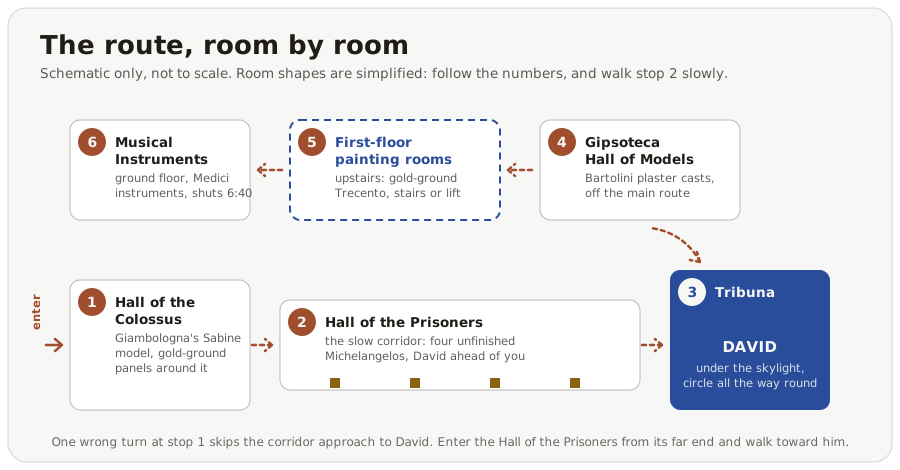
Enter through the Hall of the Colossus, then walk the Hall of the Prisoners slowly toward David, letting the four unfinished figures build to the Tribuna. Stand with David under his skylight, then loop back for the ground-floor musical instruments and the first-floor painting rooms. The Accademia is compact, so the order matters more than the map, and one wrong turn skips the corridor that makes David land.
Most people turn the wrong way. They clear security, see the cloakroom and the shop signage off to one side, and drift toward them, which quietly puts them into the museum backwards. I catch it every week with guests. The Accademia is small, and that smallness fools people into thinking order does not matter here. It matters more than almost anywhere, because the building was rebuilt around one long sightline, and you either walk into that sightline or you spoil it.
What is the best order to walk the Accademia's rooms?
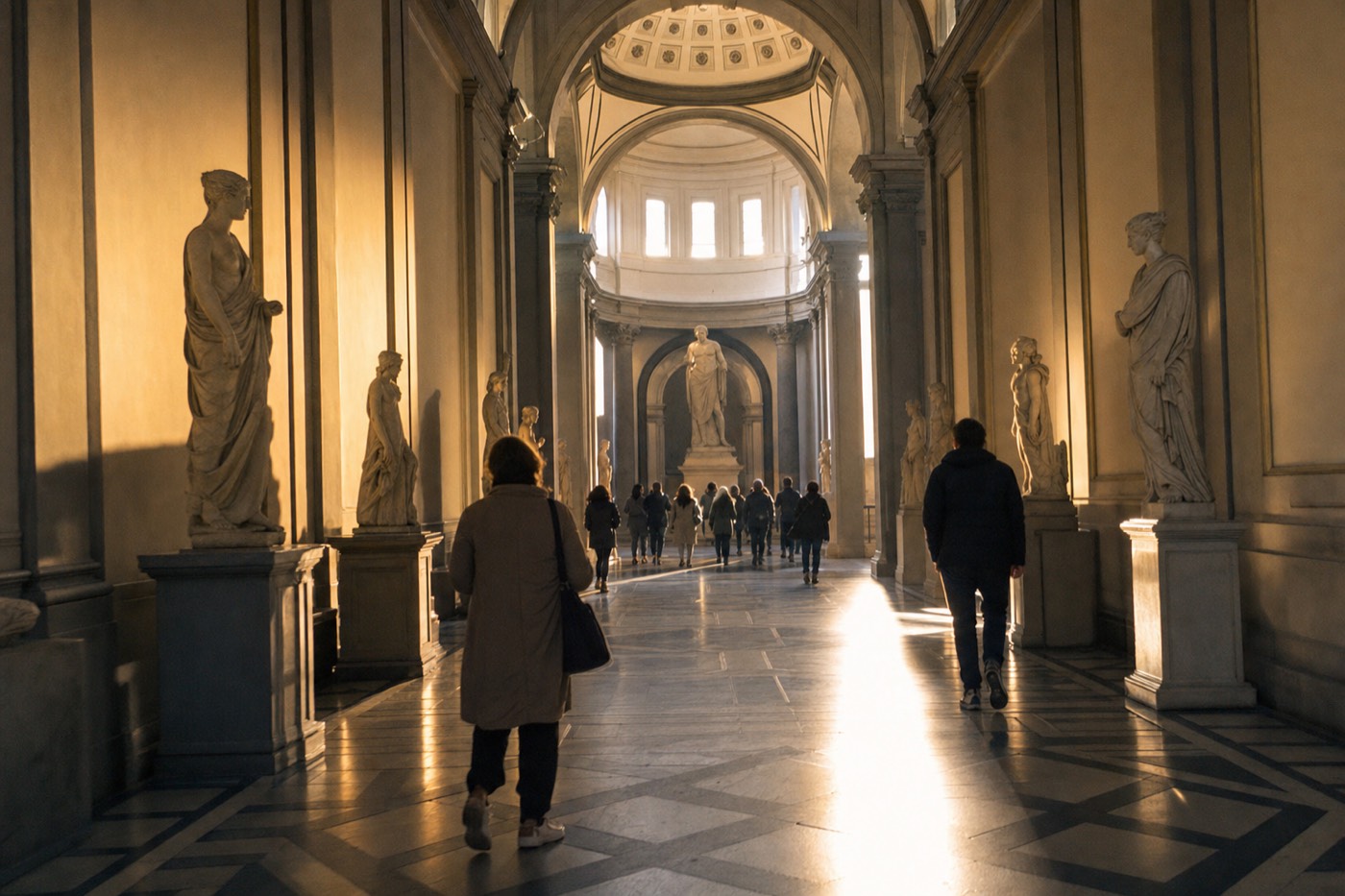
Start in the Hall of the Colossus, then enter the Hall of the Prisoners and walk its full length toward David before you reach him. Stop in the Tribuna under the skylight. Only then loop back for the ground-floor musical instruments and, if your legs allow, the first-floor painting rooms. The whole loop is six areas and reads well in about ninety minutes.
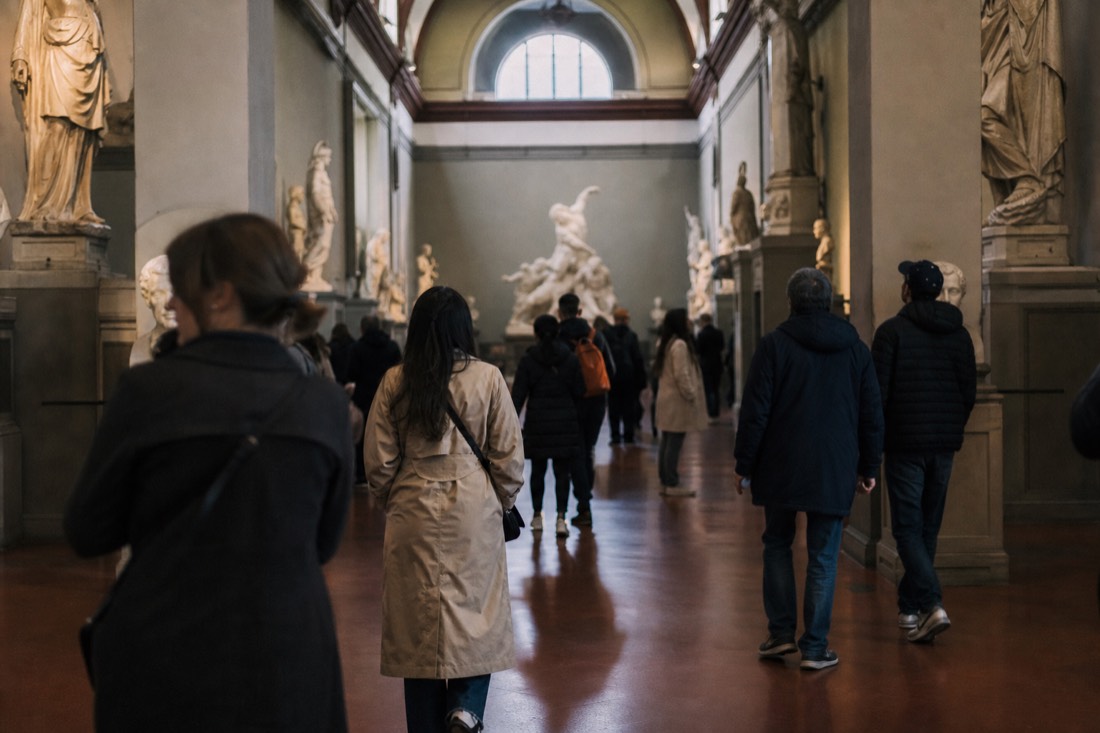
The gallery sits on a single main axis with a handful of rooms hanging off it, which is why the route is almost impossible to get lost in and surprisingly easy to get wrong. Getting lost is not the risk. Arriving at David from the side, before the corridor has done its work, is the risk. Here is the sequence I give every guest, numbered the way I actually walk it.
| Stop | Room | What is there |
|---|---|---|
| 1 | Hall of the Colossus (Sala del Colosso) | Giambologna's full-size plaster model of the Rape of the Sabine Women, gold-ground panels around the walls |
| 2 | Hall of the Prisoners | The four unfinished Prisoners, walked slowly with David framed at the end |
| 3 | Tribuna | David, alone under his purpose-built skylight |
| 4 | Gipsoteca, the Hall of Models | Bartolini plaster casts, the quietest room in the building |
| 5 | First-floor painting rooms | Gold-ground Trecento panels, reached by stairs or lift |
| 6 | Musical Instruments rooms | The Medici collection on the ground floor, easy to miss on the way out |
Stops one through three are the spine and never change. Four, five, and six are the loop back, and you can trim them to fit your day. What fills the longer visits is rarely David himself, it is everything most people did not know was in here.
Which way do you turn when you walk in, and what is the one wrong turn?
Head for the Hall of the Colossus and the mouth of the Prisoners corridor, which open ahead and to the left as you clear the entrance checks. Arrange external storage for large bags before arriving; the museum does not provide a cloakroom. Enter the Prisoners hall from its far end and keep David ahead of you the whole way.
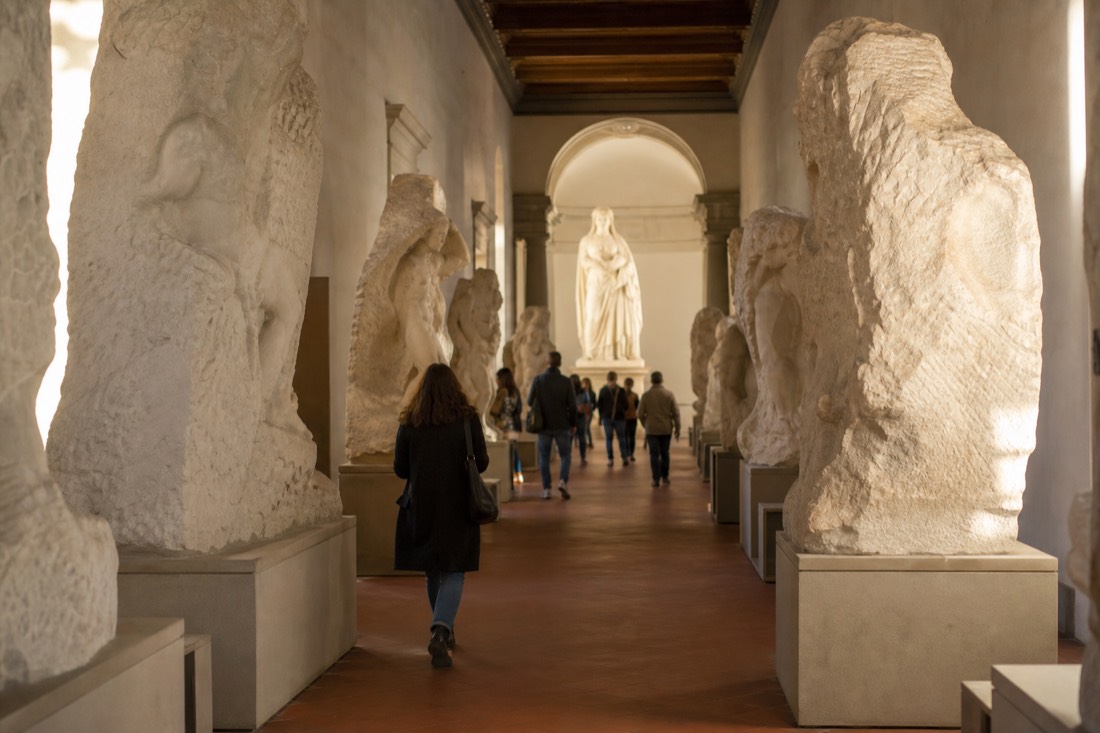
This is the single thing I wish every visitor knew before they came in. The four Prisoners were carved in the 1520s for the tomb of Pope Julius II and left unfinished, half-trapped in their blocks. Walked toward David, they read as a slow release: rough stone, a shoulder emerging, a knee, then the fully freed figure waiting at the end of the hall. Reverse that walk and the Prisoners become an afterthought you glance at while leaving. The corridor is the argument the museum is making, and the sequence is the whole point, which is why I break the Prisoners down on their own in the piece on Michelangelo's unfinished figures.
How much time does each room deserve?
David absorbs twenty to twenty-five minutes whether you plan it or not. Give the Prisoners about fifteen, the Colossus ten, and the instruments and each painting floor ten to fifteen. That lands a full visit near ninety minutes, or a focused forty-five if you hold to the main axis and skip the upstairs.
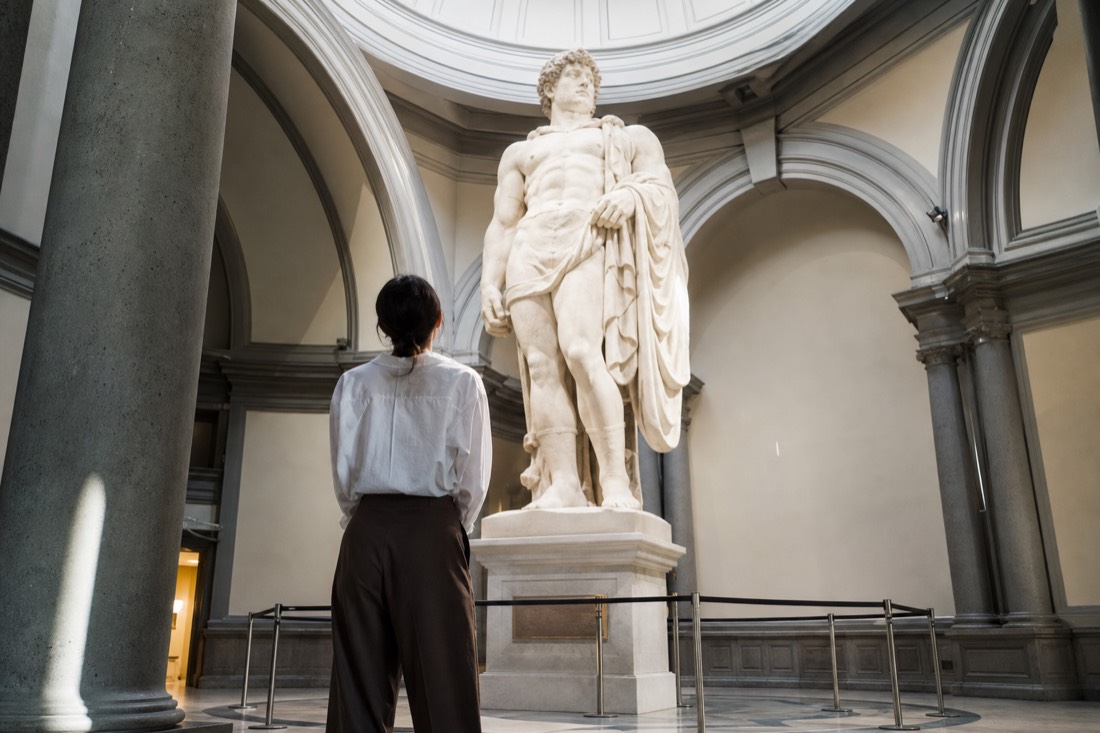
The minutes are lopsided on purpose. People circle David, sit on the benches, and circle him again, because the statue is 5.17 metres tall and the room was built to make you look up. Everything else you can pace. The table below is what I aim for with an unhurried group, and the same proportions hold at any slot, which is the deeper point behind how long the Accademia really takes.
| Area | Minutes I give it | How often visitors skip it |
|---|---|---|
| Tribuna (David) | 20-25 | Never |
| Hall of the Prisoners | 15 | Rarely, but often rushed |
| Hall of the Colossus | 10 | Sometimes, walked straight through |
| Musical Instruments rooms | 10-15 | Very often |
| First-floor painting rooms | 10-15 | Most skip the stairs |
| Gipsoteca | 10-15 | The most missed of all |
Once you have the order and the minutes, the last decision is simply securing the entry window, because the route only works if you are inside when you meant to be. Check the times offered for your date; neither availability nor a quiet room is guaranteed.
What is on the first floor, and is it worth the stairs?
Yes, if you have twenty minutes and working knees, though a lift near the Gipsoteca gets you up without them. Upstairs holds the gold-ground Trecento paintings, the most-skipped and quietest part of the building. Mind the 18:40 cutoff, when those rooms and the musical instruments shut, ten minutes before the museum itself closes.
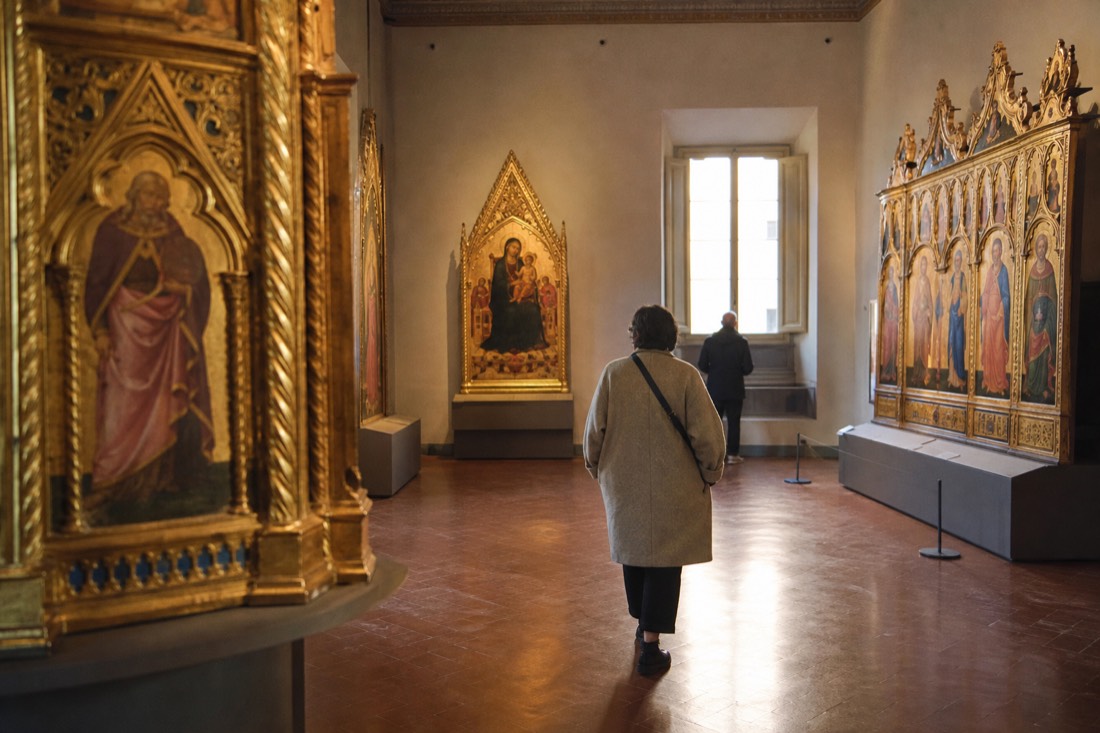
The upstairs rooms are where the Accademia stops being a one-statue museum. Fewer people climb, so you get the gold-ground panels almost to yourself, which is its own reward late in a busy day. The one hard rule is the clock. The official visit page confirms that entry to the ground-floor instruments and the first-floor rooms is cut off from 18:40, so a very late slot quietly loses you two of the six areas.
| Area | Floor | How you reach it | Access ends |
|---|---|---|---|
| Colossus, Prisoners, Tribuna | Ground | The main axis, straight ahead from the entrance | Close, 18:50 |
| Gipsoteca | Ground | A short detour off the main route | Close, 18:50 |
| Musical Instruments | Ground | A wing near the exit, easily missed | Cut off from 18:40 |
| Painting rooms | First | Stairs or a lift near the Gipsoteca | Cut off from 18:40 |
Compared with the Uffizi's endless enfilade of rooms, this is a museum you can genuinely finish, a difference I lay out in full in Uffizi vs Accademia.
The route is forgiving in one way and unforgiving in another. You cannot really get lost, but you can absolutely waste the best thing the building does, which is the walk toward David through his half-finished companions. Get that one turn right at the start and the rest of the loop takes care of itself.
Quick questions
Is the Accademia easy to find your way around?
Very. It is built on one main axis with a few rooms off it, so getting lost is nearly impossible. The only real mistake is arriving at David from the side instead of walking the Prisoners corridor toward him.
Where is David inside the Accademia?
In the Tribuna, a round skylit room built specifically for him at the end of the Hall of the Prisoners. Walk the corridor of unfinished figures and he is framed directly ahead of you.
Should I do the upstairs rooms first or last?
Last. Keep the ground-floor spine, Colossus to Prisoners to David, in one clean walk, then loop back down for the instruments and up for the paintings. Just start the upstairs before 18:40, when those rooms close.
How long is the full route through the Accademia?
About 90 minutes at an unhurried pace covering all six areas, or a focused 45 if you hold to the main axis of Colossus, Prisoners, and David and skip the upstairs and the instruments.
Your Next Step
Check Your Florence Date
Accademia Timed Entry
Have your travel date in mind? Explore David, the Prisoners and the other permanent rooms at your own pace. Check the start and meeting details before arranging your next stop.
60 minutes suggested; allow extra time for security. Meet at Via Ricasoli 45 blue, 15 minutes early; bring matching ID for every visitor. No live guide or luggage storage.
Initial editorial suggestion. Confirm the option, party requirements and final total before paying.
Scheduled departures load automatically. Final availability and price are confirmed on Viator.
A scheduled start is not a confirmed place. Your date is a planning aid; select it again on Viator.
No verified option fits those choices. Adjust the controls or reset to the general suggestions.
Compare Options And Fit This To Your Visit
Accademia Timed Entry: Explore David, the Prisoners and the other permanent rooms at your own pace. 60 minutes suggested; allow extra time for security. Meet at Via Ricasoli 45 blue, 15 minutes early; bring matching ID for every visitor. No live guide or luggage storage.
Accademia With An English Guide: See David with an English-speaking guide, then stay inside to explore independently. 65 minutes; admission and headsets included. Meet at Via Ricasoli 39, 15 minutes early. No hotel pickup, meals or luggage storage.
Accademia Entry And Audio Options: Choose an independent visit with a phone audio guide, or select a licensed guided option. About 1 hour. Permanent exhibitions included. Audio and guided inclusions depend on the option selected. Bring ID, a charged phone and headphones; arrive 10–15 minutes early at the option’s meeting point. Large bags prohibited.
Private Accademia Art Tour: Discuss David and the unfinished sculptures with your own art historian guide. 2 hours; admission included. Selected central hotels offer walking pickup, not a car transfer. Confirm your exact hotel or meeting point with the operator.
Affiliate links may earn us a commission at no extra cost to you. Booking is completed with the provider.