Beyond the statue
What to See in the Accademia Besides David
Most people give the rest of this museum ten minutes. It has an easy hour in it, and half of that hour is nearly empty.
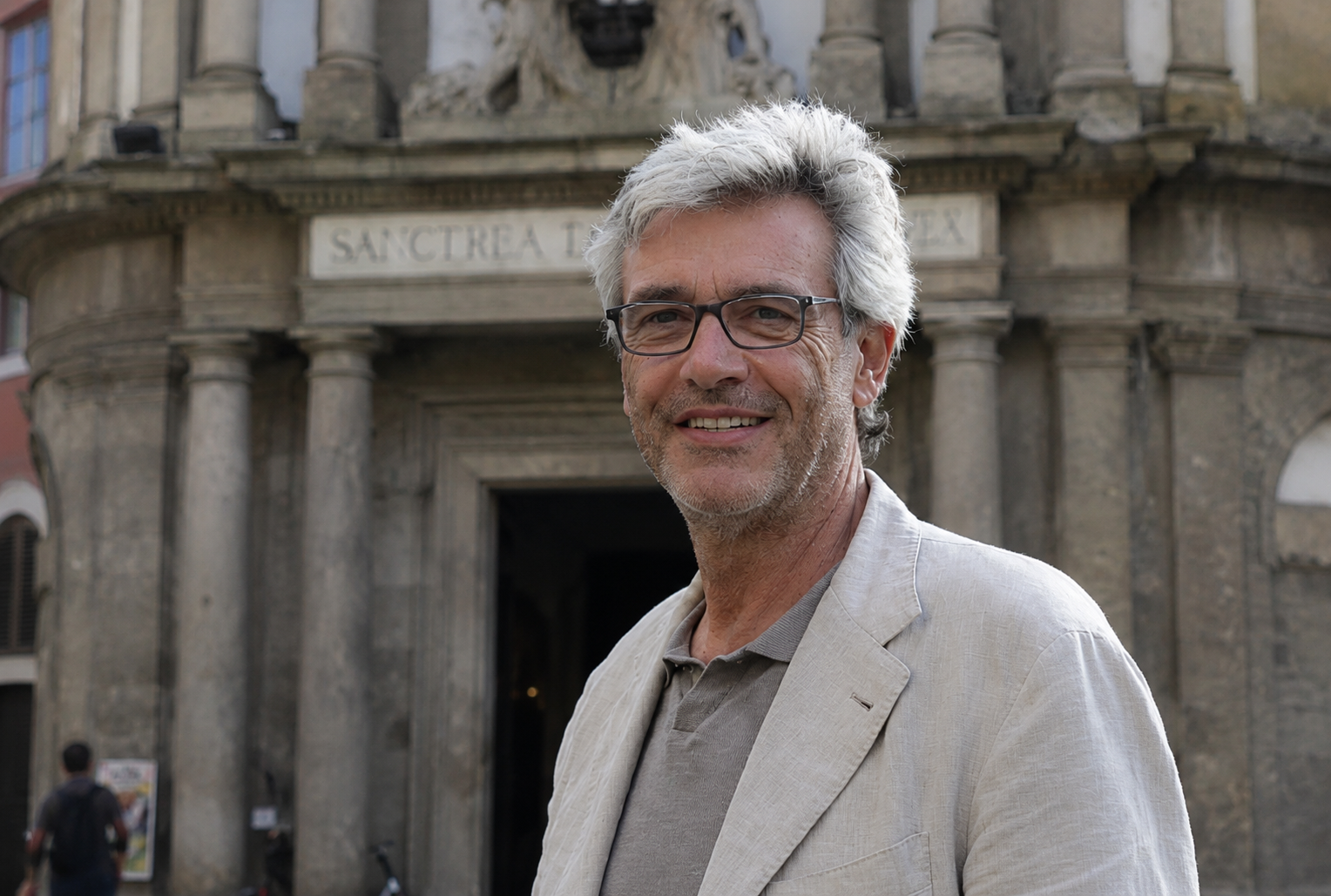 Written with Luca Moretti, Florence Accademia Gallery guide and skip-the-line specialist
Short answer
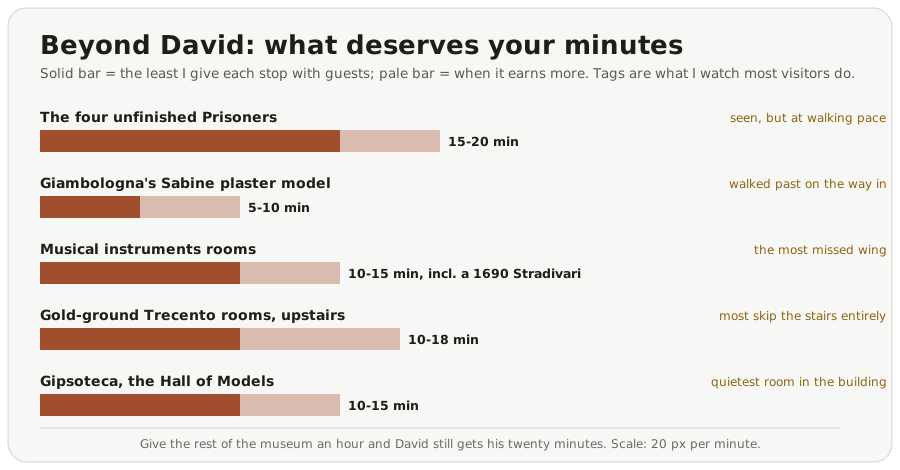
Besides David, the Accademia holds Michelangelo's four unfinished Prisoners, Giambologna's full-size plaster model of the Rape of the Sabine Women in the Hall of the Colossus, rooms of gold-ground Trecento paintings, a Medici collection of musical instruments including a 1690 Stradivari tenor viola, and the Gipsoteca of Bartolini plaster casts. Give it an hour and David still gets his twenty minutes.
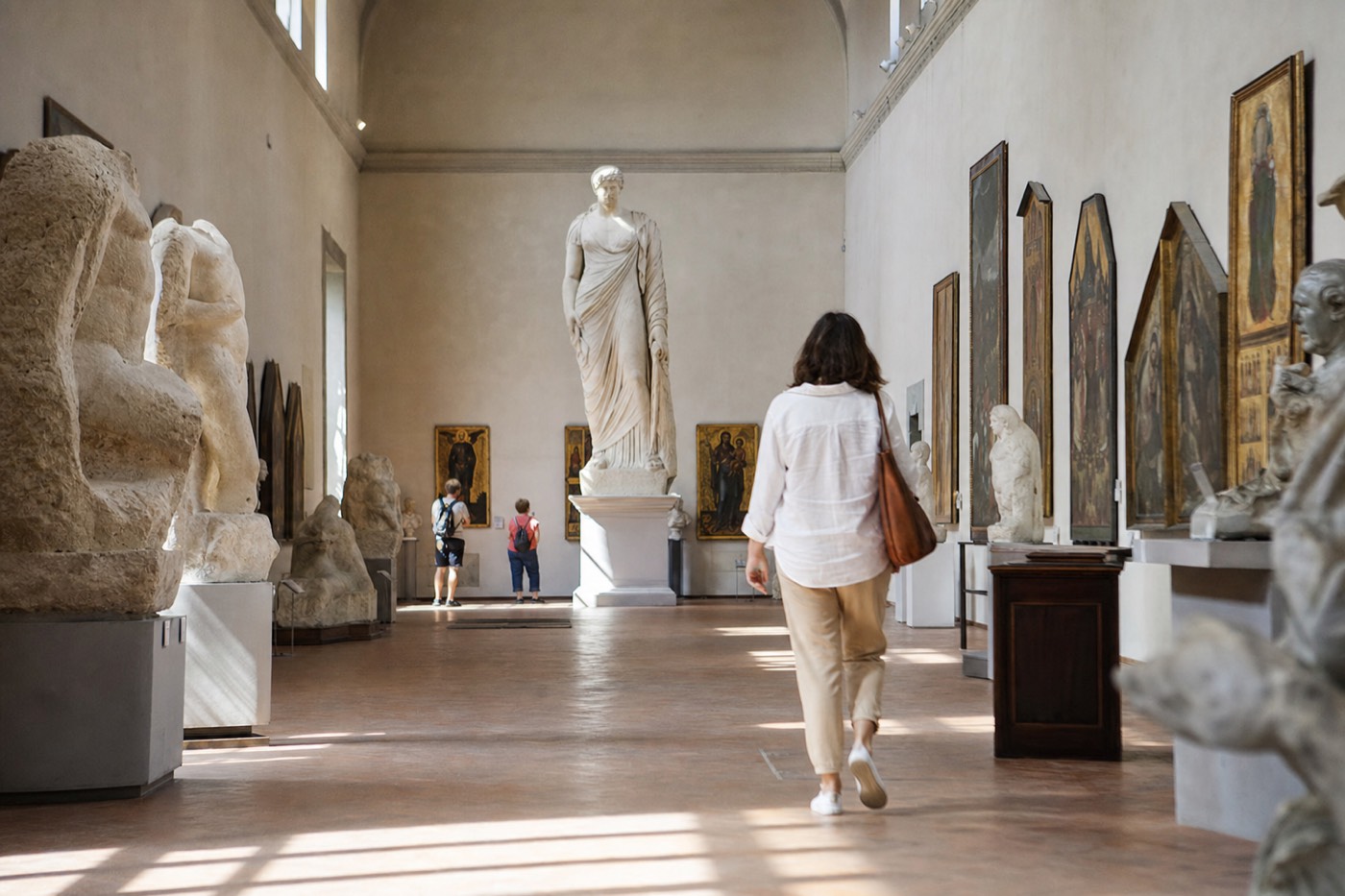
I watch it happen most mornings. A couple walks the corridor, stands with David for five good minutes, takes the photograph, and turns for the exit as if the museum were now over. They have seen the headline and missed the paper. The Accademia is not a one-statue building, whatever the ticket line out front suggests, and the works people walk past are the ones I most often get thanked for pointing out later.
What else is there to see in the Accademia besides David?
Five things earn real time: Michelangelo's four unfinished Prisoners in the corridor to David, Giambologna's full-size plaster Sabine model in the Hall of the Colossus, the gold-ground Trecento painting rooms upstairs, the Medici musical instruments including a 1690 Stradivari, and the Gipsoteca of Bartolini plaster casts. Together they hold an easy hour.
The museum was founded in 1784 and became a collection built around teaching and Florentine art history, not a single trophy. That shows in how varied the rooms are. Here is what I steer guests toward once the David photograph is safely taken, with a rough sense of how long each deserves and how routinely it gets skipped.
| Work | Where it sits | Minutes it deserves | Skip rate |
|---|---|---|---|
| The four unfinished Prisoners | The corridor leading to David | 15-20 | Seen, but rushed |
| Giambologna's plaster Sabine model | Hall of the Colossus, first room | 5-10 | Often walked past |
| Gold-ground Trecento paintings | First-floor rooms | 10-18 | Most skip the stairs |
| Musical instruments, incl. a 1690 Stradivari | Ground-floor wing | 10-15 | The most missed wing |
| Gipsoteca, the Hall of Models | Off the main route | 10-15 | The quietest room |
None of these is a consolation prize. Each one is a reason people who thought they were "done" with the Accademia end up staying another forty minutes, which is a large part of the answer to whether the museum is worth it at all.
What is the plaster giant in the first room?
It is Giambologna's full-size plaster model for the Rape of the Sabine Women, made around 1579 to 1583 as the working prototype for the marble that still stands in the Loggia dei Lanzi outside. It fills the Hall of the Colossus, the first room you enter, and most people breeze past it on their way to David without realising what it is.
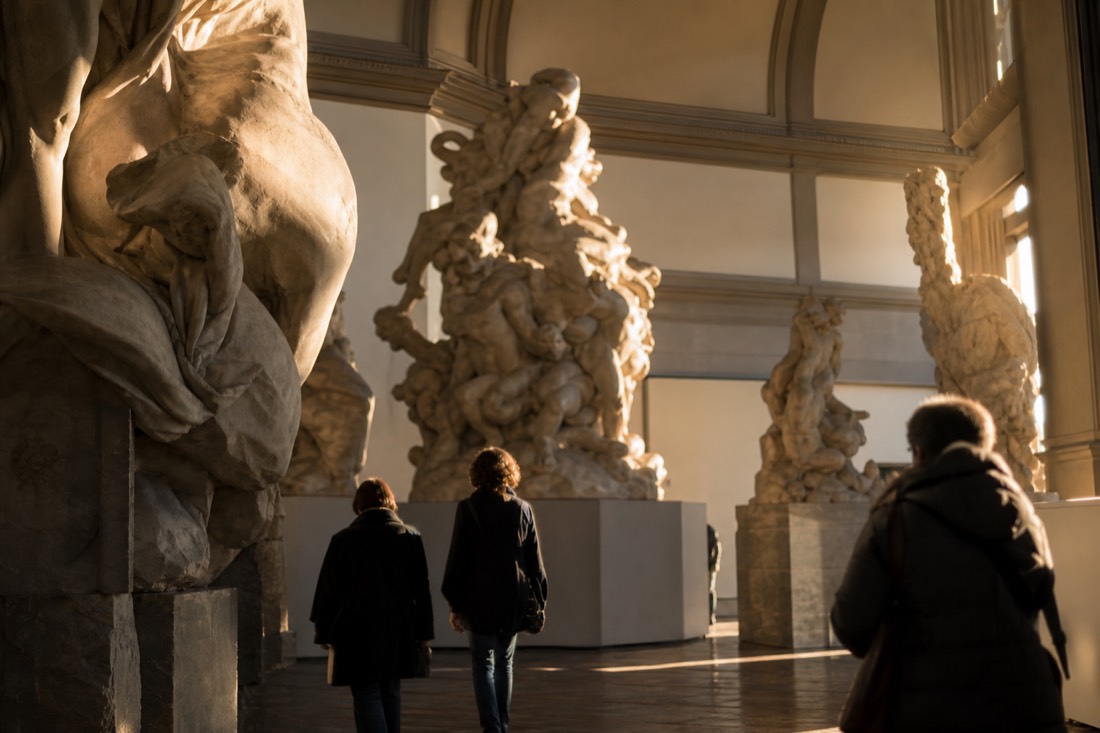
Standing in front of it, you are looking at the artist's actual full-scale rehearsal, the object he worked out the twisting composition on before a chisel touched marble. That is rarer than the finished statue in the piazza, in a sense, because the finished statue is a thing everyone can see for free and the model is the private working stage almost nobody thinks to look at. The Hall of the Colossus wraps it in gold-ground panels, so the room doubles as your first taste of the painting collection. Ten minutes here changes how the rest of the visit reads, and it is the natural first stop on the room-by-room route.
If you like knowing what you are actually standing in front of, a live-guided tour is a separate booking built for exactly that, and you can check the tour and dates here. Here is the provenance of the standout works, dates and all.
| Work | Maker | When | Medium |
|---|---|---|---|
| Model of the Rape of the Sabine Women | Giambologna | c. 1579-1583 | Full-size plaster |
| The four Prisoners | Michelangelo | 1520s, unfinished | Marble |
| Tenor viola | Antonio Stradivari | 1690 | Wood, Medici crest inlay |
| Gipsoteca casts | Bartolini and Pampaloni | 19th century | Plaster |
| Gold-ground panels | Florentine masters | 13th to early 15th c. | Tempera and gold on panel |
Are the unfinished Prisoners worth seeing?
They may be the most quietly powerful thing in the building. The four Prisoners were carved in the 1520s for the never-completed tomb of Pope Julius II and left half-finished, figures that look like they are fighting free of the raw block. Walked slowly toward David, they turn the corridor into the single best approach in the museum.
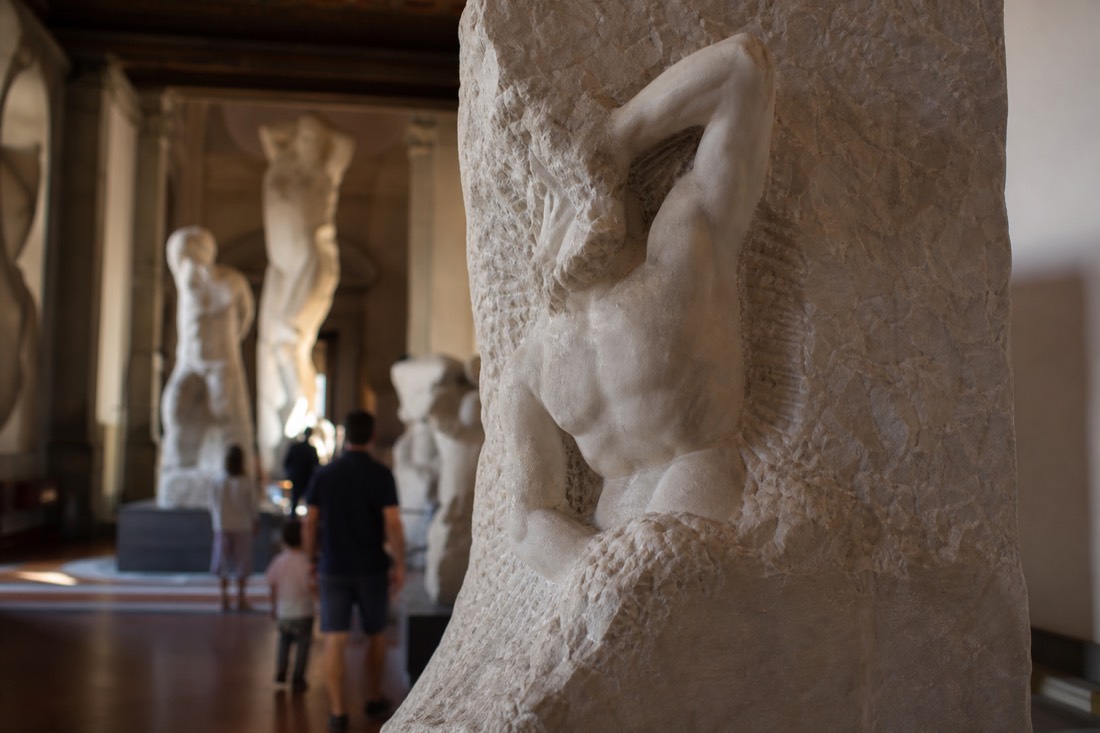
There is a debate about whether Michelangelo left them unfinished by circumstance or on purpose, and standing there you understand why people argue about it. A shoulder is fully polished while a leg is still trapped in tool marks. The tomb project they were meant for stretched on for decades and shrank with every version, which is how these giants ended up here instead of in Rome. I find guests linger far longer than they expect, tracing where the finished surface gives way to rough stone. If they grip you, read on in the deeper piece on the Prisoners, which is where the "non-finito" question really opens up.
Once the Prisoners have their hooks in you, the practical question is simply making sure you are inside with time to spare, because these are the rooms a rushed visit sacrifices first. An early slot buys you the corridor before the crowd, which is exactly when the half-finished figures read best.
What is in the musical instruments rooms?
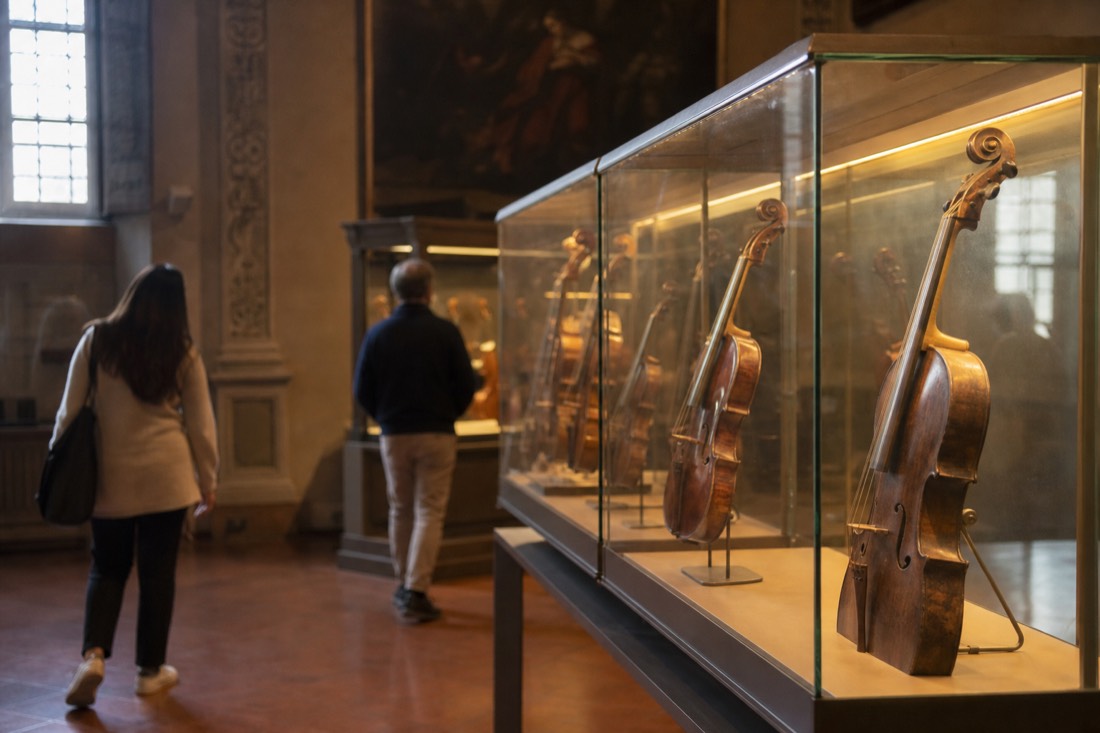
A Grand Ducal collection of around fifty instruments from the Medici and Lorraine households, the most-missed wing in the museum. Its centrepiece is a tenor viola built by Antonio Stradivari in 1690, inlaid with the Medici crest in mother-of-pearl and ebony, part of a five-instrument set made for the Grand Prince Ferdinando. Ten minutes here is time well spent.
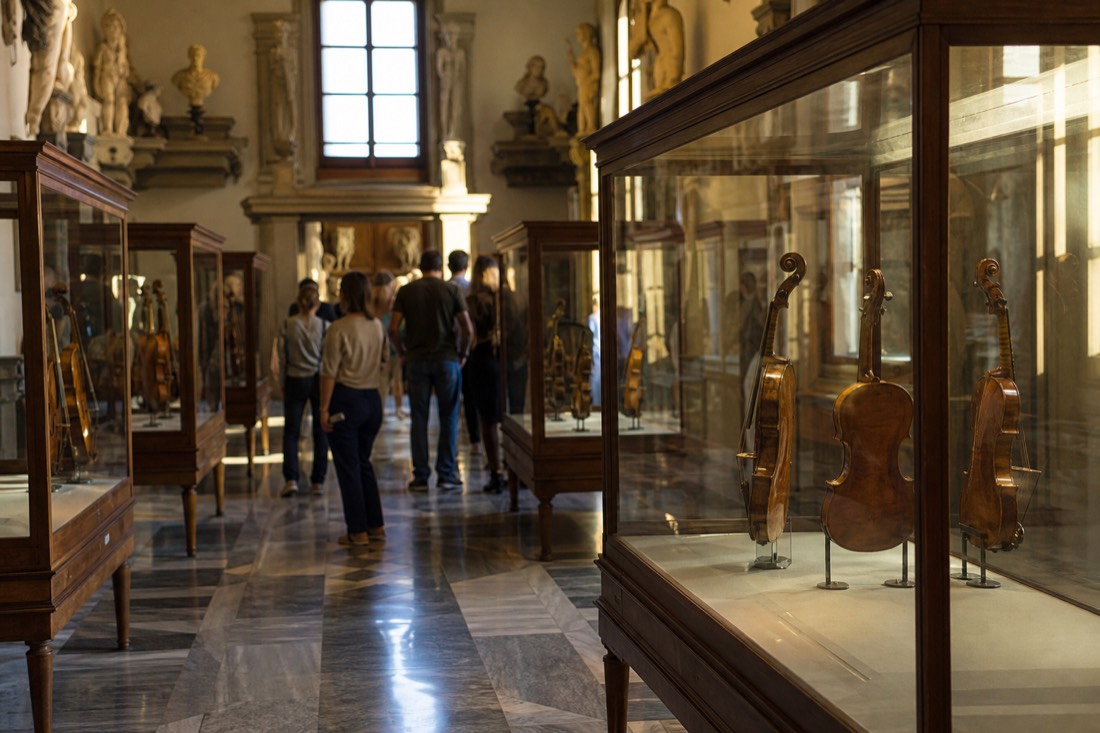
This is the wing I have to talk people into, and the one they thank me for afterward. A Stradivari is a name most visitors know without ever expecting to stand in front of one, and this tenor viola is not a spare instrument, it was commissioned court work with the Medici crest worked into the wood. The collection sits in the wing tied to the Cherubini Conservatory next door, which is why the instruments feel less like museum props and more like tools that were played.
Beyond the single objects, the Accademia is really three collections wearing one roof, and knowing which is which helps you budget the loop.
| Collection | Roughly what and when | Why bother |
|---|---|---|
| Gold-ground paintings | Panels from the 13th to the early 15th century | The gilded Florentine story before the Renaissance broke |
| Medici musical instruments | About 50 pieces, incl. a 1690 Stradivari | Court craftsmanship almost nobody queues for |
| Gipsoteca plaster casts | 19th-century casts by Bartolini and Pampaloni, plus a Pontormo fresco | The quietest, strangest room, wall to wall with faces |
Is the Gipsoteca worth the detour?
If you want the museum's calmest room, yes. The Gipsoteca, or Hall of Models, is lined with 19th-century plaster casts by the sculptor Lorenzo Bartolini and Luigi Pampaloni, studies pinned with small reference nails, plus a Pontormo fresco. It sits off the main route, so it stays quiet even when David's room is packed.
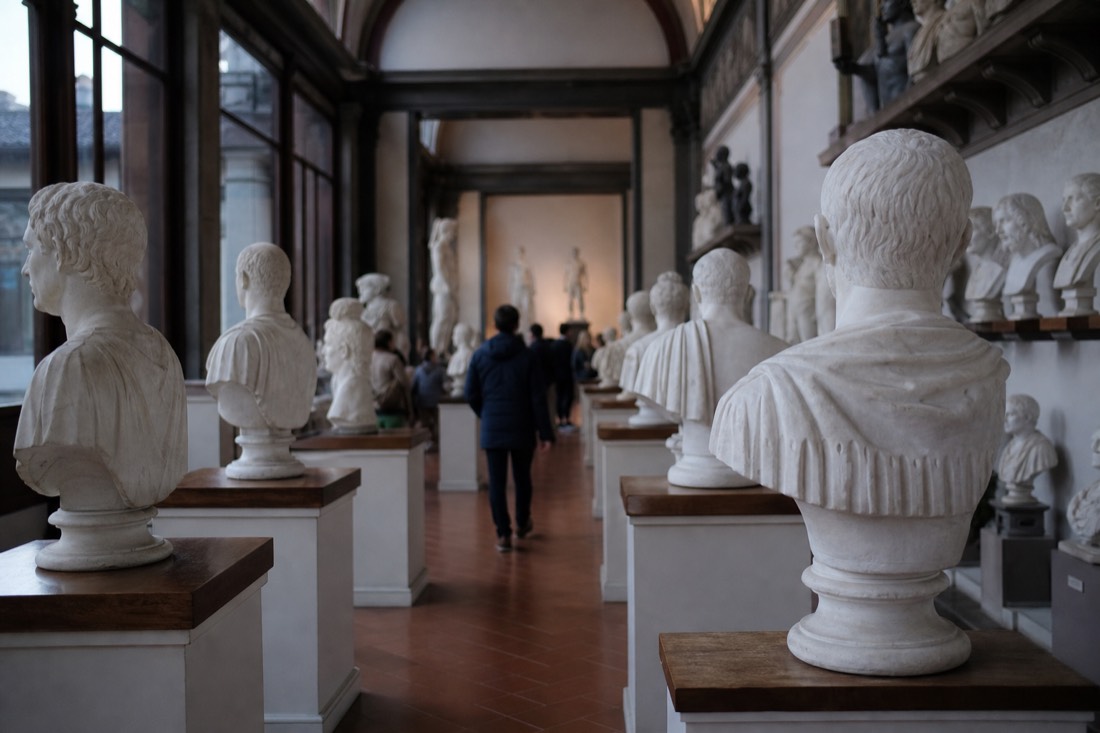
Walking in feels like stepping backstage. These are the working casts a sculptor kept, dozens of faces and figures crowded together, and the effect is completely different from the polished marble everyone comes for. It is the room I send people to when David's tribune is shoulder to shoulder and they want to breathe. Set against the scale of the Uffizi, the Accademia's real advantage is that these side rooms are reachable in one visit rather than lost in a marathon, a contrast I walk through in Uffizi vs Accademia.
The trick with the Accademia is to arrive knowing the headline is only the first line. See David properly, then give the building the extra hour it is quietly holding, and you walk out with a museum most visitors never actually met.
In what order should you walk the Accademia to see it all?
Start in the Hall of the Colossus with Giambologna's plaster giant, turn into the Prisoners' corridor and walk it slowly toward David, then give David his twenty minutes under the dome. Double back for the musical instruments wing while others queue, and finish upstairs among the gold-ground paintings and in the Gipsoteca. About an hour and twenty, unhurried.
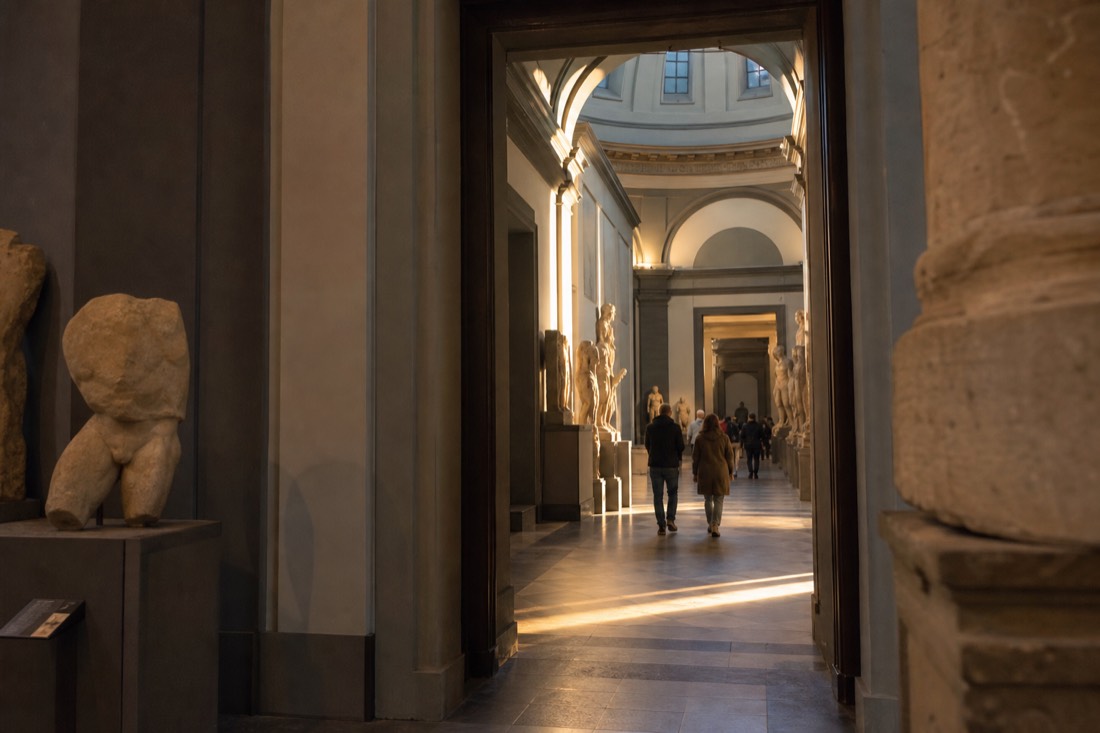
Order matters here more than at a big museum, because the Accademia has one natural current and most people ride it straight to David and out. Fight that a little. The building rewards a loop, not a dash. If you enter and turn into the Hall of the Colossus first, you meet Giambologna's full-size model before the marble, which sets up everything the Prisoners and David then do with stone.
Walk the Prisoners slowly. This is the one stretch I ask guests never to rush, because the half-freed figures only work as an approach, building toward the finished giant at the end. Once David has had his time, the smart move is contrary: turn away from him and pick up the instruments wing and the stairs while the room behind you fills. The upstairs paintings and the Gipsoteca sit furthest from the door, which is exactly why they stay calm. The room-by-room detail lives in the full route guide; here is the timing at a glance.
| Stop | Room | Minutes | Why here in the order |
|---|---|---|---|
| Giambologna's Sabine model | Hall of the Colossus | 10 | First room, sets the plaster-before-marble theme |
| The four Prisoners | Corridor to David | 15-20 | The approach reads best walked slowly |
| David | The tribune | 20 | Best before the crowd thickens |
| Musical instruments | Ground-floor wing | 10-15 | Quiet doubling-back while others queue |
| Gold-ground paintings | First floor | 10-18 | Most skip the stairs, so it stays calm |
| Gipsoteca | Off the main route | 10-15 | End in the emptiest room |
If you only have thirty minutes, what should you skip?
With half an hour, hold David and the Prisoners' corridor and let the rest go. In the groups I guide, the works I tell rushed visitors to drop first are the upstairs paintings and the Gipsoteca, both wonderful and both furthest from the door. Keep the instruments wing only if your loop happens to pass it.
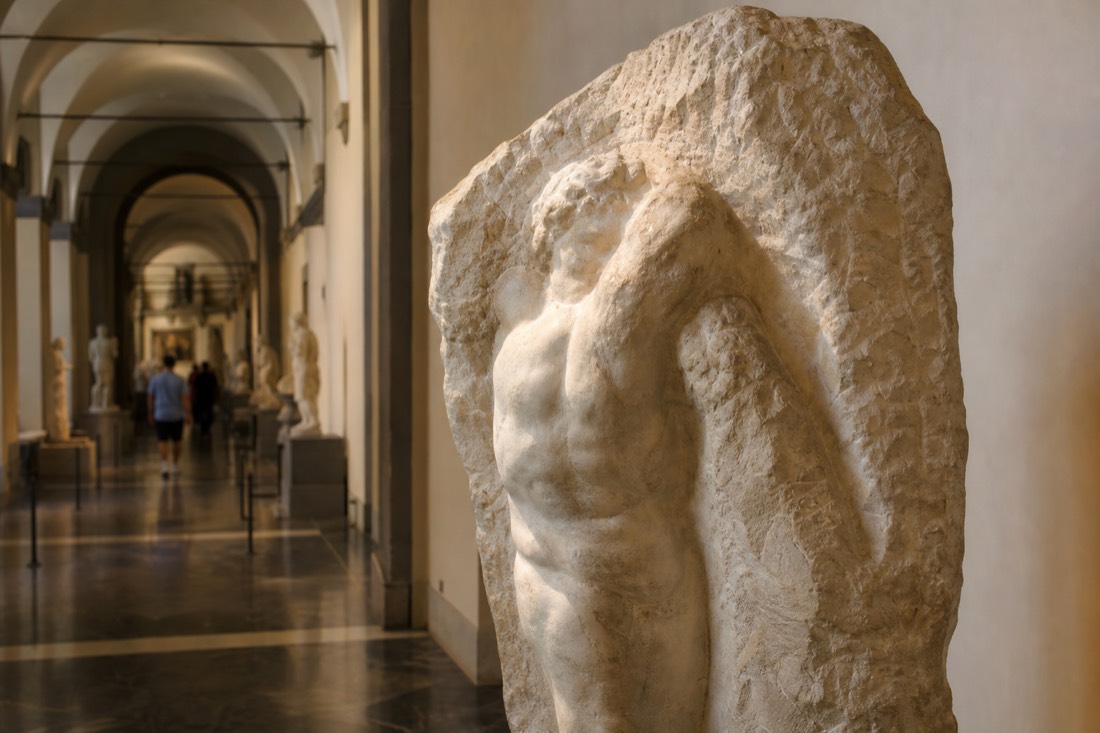
Not everyone gets the unhurried hour, and pretending otherwise sets people up to feel cheated. When a guest has a train at noon or a restless group, I triage out loud. David is never on the cutting list. The Prisoners are not either, because they cost only the few minutes of the walk you were making anyway. Everything after that is negotiable against the clock.
What I cut first is distance. The upstairs rooms and the Gipsoteca are the finest quiet corners in the building, and they are also the longest round trip from the exit, so under real time pressure they go. The Giambologna model survives most cuts because it is the first thing you pass. The instruments are a five-minute detour I keep if the loop allows and drop if it does not. Match your budget to this grid and you will not leave feeling you missed the point.
| If you have | Keep | Let go |
|---|---|---|
| 30 minutes | David and the Prisoners | Upstairs paintings, Gipsoteca |
| 45 minutes | Add the Giambologna model | Gipsoteca |
| 1 hour | Add the instruments wing | Nothing, just keep moving |
| 1.5 hours | Everything, slowly | Nothing |
| With tired children | David and the "unfinished men" hunt | The upstairs rooms |
Which rooms stay quiet when David's tribune is packed?
The upstairs gold-ground painting rooms and the Gipsoteca stay calm even at midday, because both sit off the one-way rush toward David. The musical instruments wing runs a close third. When the tribune is shoulder to shoulder, these are the rooms I send people to breathe, then bring them back to David as the first tour groups leave.
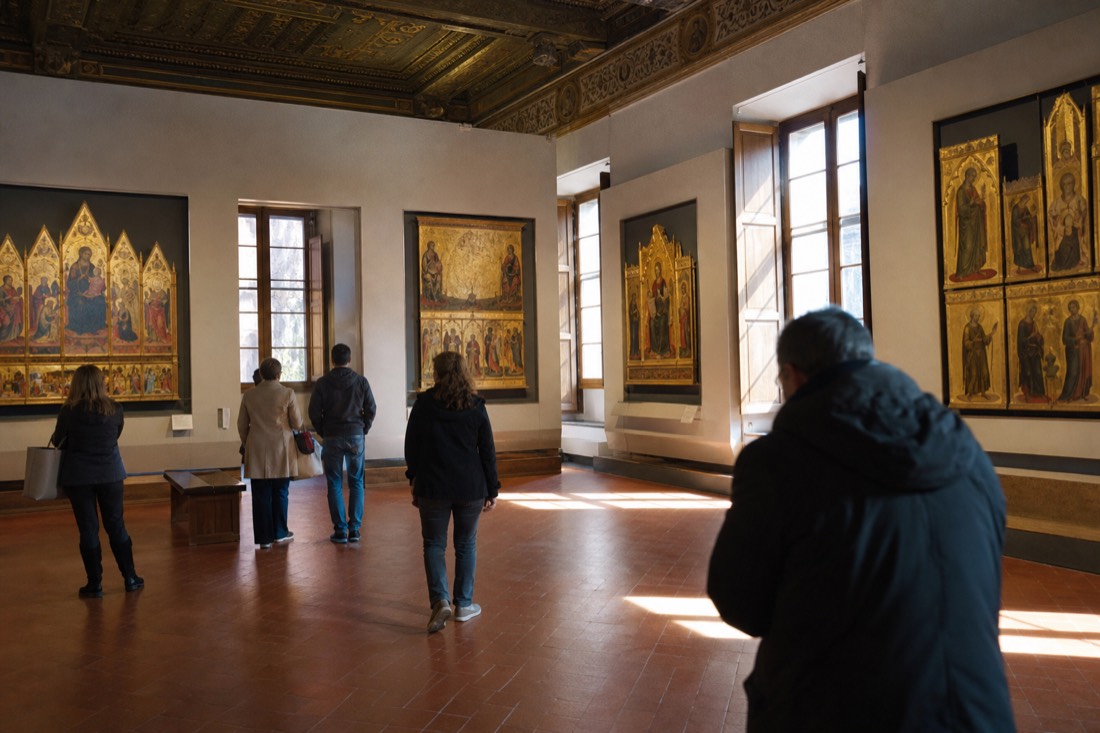
Crowding in the Accademia is uneven in a way you can use. Almost everyone moves the same direction at the same pace, from the door to David, which leaves whole rooms nearly empty a few steps off that line. The tribune itself is the one genuine pinch point, packed from mid-morning until late afternoon. Everything that is not on the direct path to it breathes.
The trick I use with guests is simple: when the tribune is a wall of phones, we step away rather than wait in it, spend ten minutes in the instruments wing or upstairs, and come back at a quarter past the hour when a couple of tour groups have cycled out. The Uffizi comparison shows why this works better here than there, since the Accademia is small enough that these escape rooms are always a few steps away. Here is where the quiet actually sits.
| Room | Crowd at midday | Best window | Why it empties |
|---|---|---|---|
| David's tribune | Packed | 8:15 or after 17:00 | Every visitor funnels here |
| Prisoners' corridor | Busy but moving | Early morning | It is the path to David |
| Hall of the Colossus | Moderate | Any time | People pass through fast |
| Musical instruments | Light | Any time | Off the David funnel |
| Gold-ground rooms upstairs | Very light | Midday | Most skip the stairs |
| Gipsoteca | Emptiest | Any time | Off the main route |
Quick questions
How long do you need for the Accademia beyond David?
About an hour covers the Prisoners, the Giambologna model, the instruments, the upstairs paintings, and the Gipsoteca at an unhurried pace. David himself adds another twenty minutes on top.
Are the Prisoners the ones meant for a tomb?
Yes. The four unfinished Prisoners were carved in the 1520s for the tomb of Pope Julius II, a project that kept shrinking and was never finished as planned, which is how they ended up in Florence instead of Rome.
Is there really a Stradivari in the Accademia?
There is: a tenor viola built by Antonio Stradivari in 1690, made for the Medici court and inlaid with the family crest. It sits in the musical instruments wing, the collection most visitors miss entirely.
What is the least crowded part of the Accademia?
The Gipsoteca, the hall of plaster casts off the main route, and the upstairs painting rooms. Both stay calm even when the tribune around David is full, so they are where I send people who want a quiet ten minutes.
Your Next Step
Check Your Florence Date
Accademia Timed Entry
Have your travel date in mind? Explore David, the Prisoners and the other permanent rooms at your own pace. Check the start and meeting details before arranging your next stop.
60 minutes suggested; allow extra time for security. Meet at Via Ricasoli 45 blue, 15 minutes early; bring matching ID for every visitor. No live guide or luggage storage.
Initial editorial suggestion. Confirm the option, party requirements and final total before paying.
Scheduled departures load automatically. Final availability and price are confirmed on Viator.
A scheduled start is not a confirmed place. Your date is a planning aid; select it again on Viator.
No verified option fits those choices. Adjust the controls or reset to the general suggestions.
Compare Options And Fit This To Your Visit
Accademia Timed Entry: Explore David, the Prisoners and the other permanent rooms at your own pace. 60 minutes suggested; allow extra time for security. Meet at Via Ricasoli 45 blue, 15 minutes early; bring matching ID for every visitor. No live guide or luggage storage.
Accademia With An English Guide: See David with an English-speaking guide, then stay inside to explore independently. 65 minutes; admission and headsets included. Meet at Via Ricasoli 39, 15 minutes early. No hotel pickup, meals or luggage storage.
Accademia Entry And Audio Options: Choose an independent visit with a phone audio guide, or select a licensed guided option. About 1 hour. Permanent exhibitions included. Audio and guided inclusions depend on the option selected. Bring ID, a charged phone and headphones; arrive 10–15 minutes early at the option’s meeting point. Large bags prohibited.
Private Accademia Art Tour: Discuss David and the unfinished sculptures with your own art historian guide. 2 hours; admission included. Selected central hotels offer walking pickup, not a car transfer. Confirm your exact hotel or meeting point with the operator.
Affiliate links may earn us a commission at no extra cost to you. Booking is completed with the provider.